

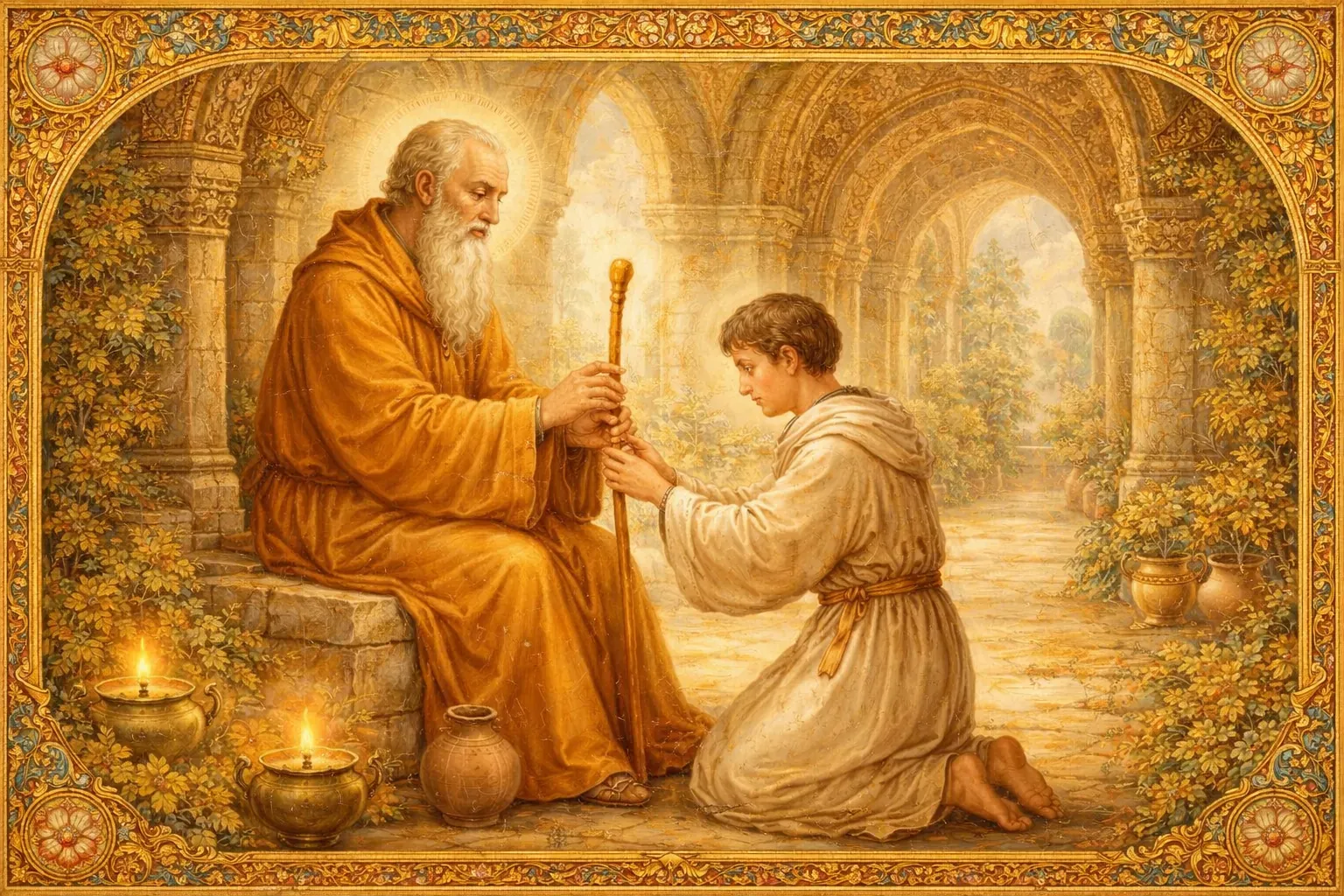
Sannyasa (Skt. saṃnyāsa) — from the root nyās ("to leave," "to renounce") with the prefix sam ("completely," "perfectly") — signifies the total renunciation of worldly attachments for the sake of achieving moksha, the supreme Liberation. This is the fourth and final stage of life (āśrama) in the classical system of varnashrama-dharma, described in the ancient dharmashastras.
According to the Manu Smriti (VI.33):
“Having renounced all attachments, studying the Vedas, dwelling in self-control and non-harming, occupied with the contemplation of Brahman — such is the path of the sannyasin.”
In the tradition of Advaita Vedanta, tracing back to Adi Shankaracharya (788–820 CE), sannyasa represents a direct and immediate path to the knowledge of the Absolute Reality (Brahman). The Brihadaranyaka Upanishad (IV.4.22) states:
“Knowing this, the Brahmins become sannyasins, seeking that world through renunciation.”
Sannyasa is not merely a monastic way of life, but the most ancient tradition, sanctified through millennia, of total dedication to spiritual sadhana, service to Dharma, and the realization of the supreme Truth. The life of a sannyasi (saṃnyāsin) is an existence within a space of deep practice, self-surrender, and continuous aspiration toward union with the Absolute.
Structure of Spiritual Training
Spiritual training in the tradition of the World Community of Sanatana Dharma follows the classical model of the guru-shishya parampara — an unbroken lineage of knowledge transmission from teacher to disciple, sanctified by the authority of the Upanishads and the Bhagavad Gita (IV.34):
“Know this through prostration, inquiry, and service. The wise who have seen the Truth will instruct you in knowledge.”
Core Elements of Training:
Satsangs with the Guru — personal meetings and discourses with the spiritual preceptor, where the living knowledge of the tradition is transmitted. The term satsaṅga (from sat — "truth," "being" and saṅga — "association") means dwelling in the presence of Truth through interaction with a realized teacher.
Lectures and Services — systematic study of sacred texts and participation in traditional rituals (pūjā, homa, āratī), which form the foundation of Shaiva and Vaishnava sadhana.
Retreats and Pilgrimages — intensive periods of practice (sādhanā) and visiting sacred sites (tīrtha-yātrā) sanctified by the presence of saints and divine manifestations.
Staying in Ashrams — living in a spiritual abode (āśrama) in an atmosphere of discipleship (brahmacārya), purity (śauca), and devotion (bhakti). An ashram represents a traditional space for spiritual transformation, described in classical texts as guru-kula — the "teacher's family."
Basic Course of Study
The traditional 12-year cycle of study is based on the classical model of brahmacharya described in the dharmashastras. This period is dedicated to deep immersion in four primary areas of spiritual knowledge:
1. Sanatana Dharma
Studying the foundations of the Eternal Dharma (sanātana dharma) includes mastering fundamental texts: Vedas, Upanishads, Bhagavad Gita, and dharmashastras (Manu Smriti, Yajnavalkya Smriti). The student grasps cosmology, ethics, ritual practice, and the philosophical foundations of the Hindu tradition.
2. Advaita Vedanta
Deep study of non-dual philosophy, systematized by Adi Shankaracharya. Core texts: Brahma Sutras with Shankara’s commentary (Śārīraka-bhāṣya), the Principal Upanishads (daśopaniṣad), Vivekachudamani, and Atma Bodha. Realizing the central formula of Advaita: tat tvam asi ("Thou art That") and the realization of the identity of Atman and Brahman.
3. Shaivism
Study of Shaiva Siddhanta and Kashmiri Shaivism — the ancient traditions of worshipping Shiva as the Supreme Reality. Primary sources: Shiva Purana, Linga Purana, Shiva Sutras of Vasugupta, Vijnana Bhairava Tantra, and agamas (Kamika-agama, Karanagama, etc.). Grasping the nature of Shiva as Absolute Consciousness (Paramaśiva).
4. Anuttara-tantra
Mastering the highest (anuttara — "unsurpassed") tantric tradition of Kashmiri Shaivism. Study of the texts of Abhinavagupta (950–1016 CE) — Tantraloka, Paratrishika-vivarana, as well as the Spanda Karikas and Pratyabhijna-hridayam. Realizing non-dual tantric practice leading to the direct recognition (pratyabhijñā) of one’s true nature as Shiva.
Initiation into Sannyasa
Upon completion of the 12-year study, a solemn ritual of accepting sannyasa (saṃnyāsa-dīkṣā) is performed. This ancient rite, dating back to Vedic times, is described in the Sannyasa Upanishads and includes:
- Renunciation of former social status and name
- Acceptance of new monastic names and robes (geruā vastra — ochre garments)
- Receiving the daṇḍa (staff) and kamaṇḍalu (water pot) — symbols of the renounced life
- Performing symbolic funerary rites (ātma-śrāddha) for the former personality
- Taking the Mahavratas — the great vows of a sannyasin
After initiation, the path of individual spiritual pursuit opens according to sva-dharma — one’s personal spiritual destiny, determined by the nature of the soul (svabhāva) and the Guru’s instructions.
Structure of the Monastic Sangha
The monastic community (saṃnyāsa-saṅgha) of the World Community of Sanatana Dharma is built on the principle of a multi-level organization, providing every brahmachari and sannyasi the opportunity to choose an individual spiritual trajectory in accordance with Moksha Dharma — the path of Liberation.
This structure traces back to the ancient tradition of the Dashanami Sampradaya — the ten monastic orders established by Adi Shankaracharya in the 8th century. As one grows spiritually and deepens their practice, the student gains the opportunity to choose one of 14 monastic families (jāti) and one of 19 spiritual statuses (kula), each representing a specific form of service to Dharma.
Fourteen Monastic Families (Jatis)
Mathapati (maṭhapati)
Preparation of future spiritual leaders, heads of monasteries (maṭha), mahants (mahant — "great superior"), and senior mentors. This path follows the tradition of Shankaracharya, who established four main mathas in the four cardinal directions of India: Sringeri (South), Dwarka (West), Puri (East), and Jyotirmath (North).
Sthanapati (sthānapati)
Training future administrators of sacred places (sthāna) and their assistants. Sthanapatis are keepers of spiritual centers, responsible for maintaining sacred space, organizing services, and receiving pilgrims.
Vidyadharas (vidyādhara)
Literally "holders of knowledge" — monks dedicated to the study, preservation, and transmission of sacred texts. This family includes teachers of Dharma, shastris (śāstrī — experts in scriptures), pandits (paṇḍita — learned Brahmins), librarians of spiritual collections, and specialists in Sanskrit and Vedic grammar.
Vidyeshvaras (vidyeśvara)
From vidyā ("knowledge") and īśvara ("lord") — "lords of knowledge," guardians of Dharma. Vidyeshvaras act as mentors for intensive spiritual practices and leaders of retreats (sādhanā-śivira), where students immerse themselves in deep meditation and tapas.
Vidyapati (vidyāpati)
"Lords of teaching" — missionaries, preachers, and spiritual mentors spreading Dharma in the world. Following the example of Shankaracharya, who performed digvijaya (a victorious tour in all directions of India), Vidyapatis travel, preaching the truths of Vedanta and Shaivism.
Sarasvati (sarasvatī)
Monks dedicated to the sacred arts and creativity for the glory of the Divine. The name traces back to the goddess Sarasvati — the patroness of knowledge, music, and arts. Sarasvatis lead bhajana-maṇḍala rituals (devotional singing circles), create sacred images (mūrti, yantra), and practice temple painting and iconography.
Tirtha-yatra (tīrtha-yātrā)
Pilgrim-monks, researchers of sacred places (tīrtha — "crossing," "holy place"), and pilgrimage guides. They study the geography of India's holiness, perform circumambulations of shrines (parikramā, kora), and accompany pilgrims on sacred journeys to the Himalayas, the Ganges, Kashi, and the temples of the twelve Jyotirlingas.
Mandira (mandira)
Temple servants — pujaris (pūjārī) performing daily worship (nitya-pūjā), and specialists in sacred temple architecture (vāstu-śāstra). Mandira followers adhere to the ancient Agamas and Shilpa-shastras, which regulate the construction of temples, the installation of divine forms, and the performance of rituals.
Pushti (puṣṭi)
From puṣṭi — "prosperity," "well-being." Monks of this family serve the material and spiritual prosperity of the community through traditional sciences: Jyotish (jyotiṣa — Vedic astrology), Ayurveda (āyurveda — science of life), and Vastu (vāstu — sacred architecture). This also includes priests performing special rites (yajña, homa), theurgists, and thaumaturgists practicing sacred acts for the blessing of the community.
Vrata (vrata)
Mentors in the field of sacred vows (vrata) and ascetic practices. Vratas are disciplines of abstinence, fasting, pilgrimage, and special rituals described in the Puranas and Agamas. Vrata monks oversee the observance of vows such as Mahashivaratri, Ekadashi, Chaturmasya, and other sacred periods of the year.
Yati (yati)
From yati — "ascetic," "striver." Specialists in intensive ascetic sadhanas (tapas), mentors for wandering ascetics (sadhus) living in renunciation and austere simplicity. Yatis follow the lifestyle described in the Sannyasa Upanishads, practicing extreme forms of renunciation and meditation.
Jangama (jaṅgama)
From jaṅgama — "moving," "wandering." Monks who have chosen the path of constant pilgrimage without attachment to one place, following the example of the ancient parivrājaka — wandering philosophers of the Upanishads. Jangama also includes the spiritual mentors of such wanderers.
Puja (pūjā)
Priests (pujaris) specializing in conducting worship services in ashrams and spiritual centers. They perform morning and evening services (prātaḥ-sandhyā, sāyaṃ-sandhyā), festive ceremonies (utsava), and special rituals according to the Shaiva and Vaishnava Agama traditions.
Karunya-seva (karuṇya-sevā)
From karuṇā — "compassion" and sevā — "service." A direction dedicated to active compassion and service to society through education, aid to those in need, medical care, and social work. This family is currently in the stage of establishment and formation of its traditions of service.
Cosmos of Liberated Souls
The world of a sannyasi is a vast cosmos of souls seeking liberation (mumukṣu), where each monk creates his own inner universe of spiritual realization. The diversity of monastic paths reflects the fundamental principle of Sanatana Dharma: there are many paths to the one Truth, and each soul chooses the path of service and practice that corresponds to its nature and spiritual destiny. Stepping onto the path of sannyasa, one leaves behind the limitations of the ego (ahaṃkāra) and social roles, choosing freedom (mukti), purity (śuddhi), and the light of inner bliss (ānanda). This is not an escape from the world, but the transformation of existence into continuous service to the Divine and all living beings.
Conditions for Accepting Sannyasa
To obtain information regarding the conditions for accepting sannyasa and to submit an official petition, a letter must be sent to the Sannyasa Department of the World Community of Sanatana Dharma at the following address:
The letter should include:
- A brief biography and spiritual path
- Motivation for accepting sannyasa
- Experience in practice and study of Dharma
- Readiness for a 12-year period of training
Upon review of the petition, a representative of the Sannyasa Department will contact the candidate for further instructions and to establish a connection with a spiritual mentor.
Oṃ Namaḥ Śivāya
