

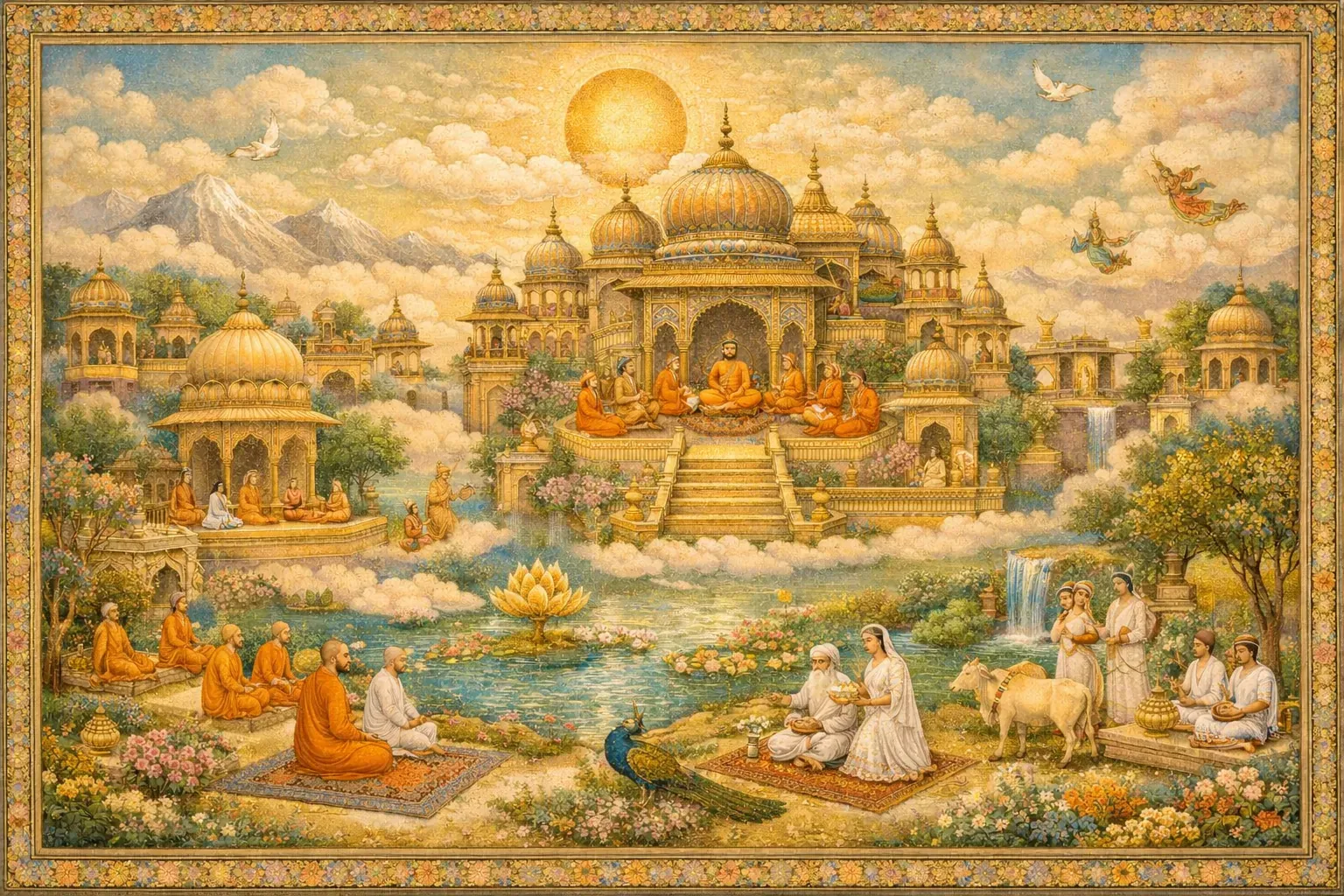
The term "Ashram" (Skt. āśrama) dates back to the verbal root śram, meaning "to make an effort," "to practice asceticism," "to labor." In the classical understanding of the Vedic tradition, it is a place of intense spiritual labor and austerity. Etymologically, this word is also associated with the prefix ā (towards), which is interpreted as "a place where a person completely strives towards God."
Thus, a karma-sannyasi ashram is a sacred space for those who practice "renunciation in action," following the path indicated in the Bhagavad Gita (Chapter 5, verse 2):
"Sannyasa (renunciation) and karma-yoga (the yoga of action) both lead to the highest bliss; but of the two, karma-yoga is superior to the renunciation of action."
In the context of the World Community of Sanatana Dharma, a karma-sannyasi ashram represents an institutional form that allows householders (grihasthas) and practitioners who have not taken full monastic vows to lead a life as close as possible to the monastic rule (vinaya).
I. Canonical Status
An ashram in the Hindu tradition is not merely a place of residence, but a structural unit of the Sangha (spiritual community), functioning according to the strict prescriptions of the sacred texts (Shastras). Historically, this model dates back to the forest academies of the Vedic Rishis and was later systematized by Adi Shankaracharya (788–820 AD) during the creation of the Dashanami Order.
According to the "Mahanirvana Tantra", a space dedicated to the Guru and the Deity ceases to be worldly property and becomes Devaottara (the property of God). The organization of the ashram is regulated by the norms of canonical law adopted within a specific parampara (lineage of succession).
Establishment Procedure (Vidhi)
The creation of an ashram is not an act of personal initiative but requires the sanction of the lineage. The process includes the following stages:
- Samkalpa (Intention): The candidate studies the "Ashram Regulations." What is required is not theoretical interest, but a readiness for kriya-shakti (action).
- Ajna (Blessing): Submission of an official "Petition for Blessing" to the Monastic Council. Final approval is given by the Guru.
- Aparigraha (Renunciation of Property): A fundamental condition — the premises must not be under the private ownership of the ego. An internal agreement is signed to transfer the house for the needs of the Ashram, symbolizing an act of ishvara-pranidhana (dedication of oneself and one's property to the Lord).
The premises must comply with the requirements of Vastu Shastra (the science of space): it is desirable to have 3–5 rooms to ensure separate living quarters and an altar area.
II. Dinacharya: Rules and Daily Routine
Life in the ashram is subject to a strict routine (dinacharya), the goal of which is to maintain a sattvic (pure) state of consciousness. Violation of the rhythm is equated to a violation of vows.
Regulated Routine (Nitya-vidhi):
- 06:00 — Morning japa (mantra recitation). The time of Brahma-muhurta and the period immediately after sunrise.
- 09:00 — Study of sacred texts (Sutra-patha).
- 18:00 — Practice of Mahashanti meditation (Great Peace).
- 19:00 — Bhajan-mandala (chanting of hymns and bhajans).
- Daily — Twice-daily consecration of food (Naivedya) at the altar.
- Monthly — Holding a Vinaya-samhita (a gathering to study the code of conduct).
A mandatory condition is the observance of the Sangha's calendar of holidays and the performance of seva (selfless service) to uphold Dharma. At least one warden must reside in the ashram at all times. Minors are allowed to visit but are prohibited from permanent residence, which corresponds to the traditional norms of vanaprastha.
The principle of Brahmacharya (control of the senses) is strictly observed at the domestic level: men (prabhus) and women (matajis) reside in separate quarters.
III. Sacred Attributes: 24 Precious Ashram Tattvas
The ashram, as the body of the deity, must possess all the necessary "organs" and attributes that ensure the descent and retention of spiritual power (shakti). Tradition establishes a list of 24 mandatory elements (tattvas):
Symbols of Lineage and Authority:
- The Flag (Dhvaja) of Guru Dattatreya — a symbol of supreme renunciation.
- The Flag of the Advaita Teachings.
- The Ashram Standard — a plaque certifying the canonical connection with the Guru's lineage and the World Community of Sanatana Dharma.
- A portrait of the Guru and the standards of the Mahamandaleshwar, as well as portraits of other Mahamandaleshwars of the parampara (specifically, Swamini Ananda Lila Giri).
Altar Area:
- A Precious Altar of 10 deities with a full set of ritual items (upachara).
- A Precious Iconostasis above the altar (65 canonical images).
- Padukas (sandals) of the Guru on a stand — an object of worship (Guru-paduka-puja).
- A Thangka of OM, embroidered in gold.
- Iconographic images (murti) in gold frames: Dattatreya, Adi Shankaracharya, Shiva.
- The Eight Auspicious Signs (Ashtamangala).
Canon of Sacred Scriptures (Shastra-pramana):
- The Precious Scroll of the Teaching (Creed).
- A Liturgy book in a casket.
- Authoritative texts on stands: "Yoga Vasistha," "Tripura Rahasya," "Viveka Chudamani," 11 Upanishads of the "Mukhya" canon, "Avadhuta Gita," texts of Dattatreya ("Yoga Rahasya"), "Laya Amrita Upadesha Chintamani."
- The four Mahavakyas (Great Utterances of the Vedas), crafted in gold.
Symbols of Succession and Vows:
- The Refuge Tree on cloth.
- The Refuge Tree in a gold frame.
- The Parampara of the Brahmananda lineage (gold frame).
- The General Parampara of the lineage (gold frame).
- A portrait of Brahmananda in a gilded frame.
- The scroll of karma-sannyasi vows.
21-24. Plaques in gold frames with lists of vows for different statuses (karma-sannyasi, brahmachari, grihastha) and the text of the Creed.
IV. Clarification: Ashram as a Tool for Transformation
For the modern person living in the rhythm of the Kali Yuga, creating a karma-sannyasi ashram is a unique opportunity to integrate high spiritual truths into social reality. This is not an escape from the world, but the structuring of the world around a sacred center.
The ashram performs the function of a Tirtha — a ford or a place of crossing. Even if a person does not live in the ashram permanently, the very presence of such a space creates a powerful field (kshetra) where different laws operate — the laws of Dharma, rather than the laws of the market or social prestige. Members of the community settling around the ashram form a Satsang — a community of truth. Strict adherence to the schedule and the presence of consecrated attributes (24 tattvas) discipline the mind (manas) and purify the subconscious (chitta), preparing the practitioner for the deeper stages of Raja Yoga and Jnana Yoga. Taking responsibility for an ashram is the highest form of karma-yoga, transforming a householder into a true guardian of Dharma.
