Namaste!

item image

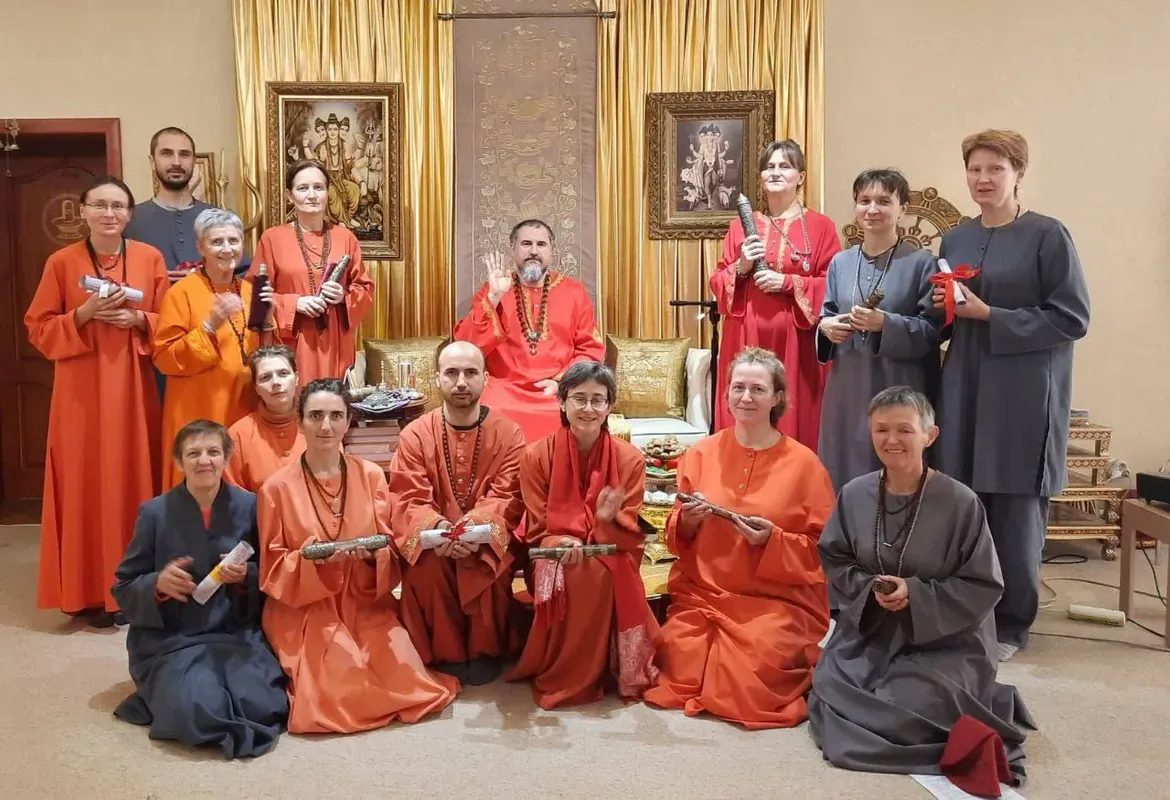
"Anugraha" Dharma Group, Minsk, Belarus

author •date 09.03.2026 •duration 4 min. reading •views 45 просм.

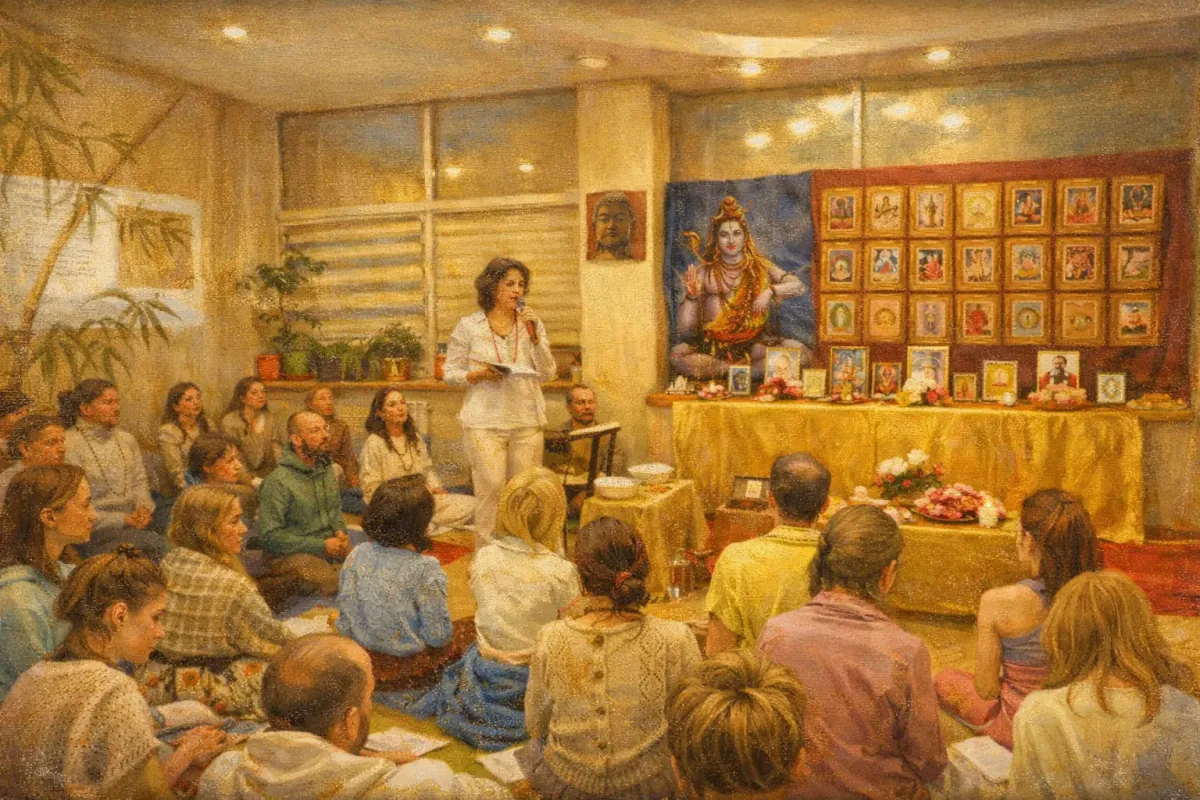
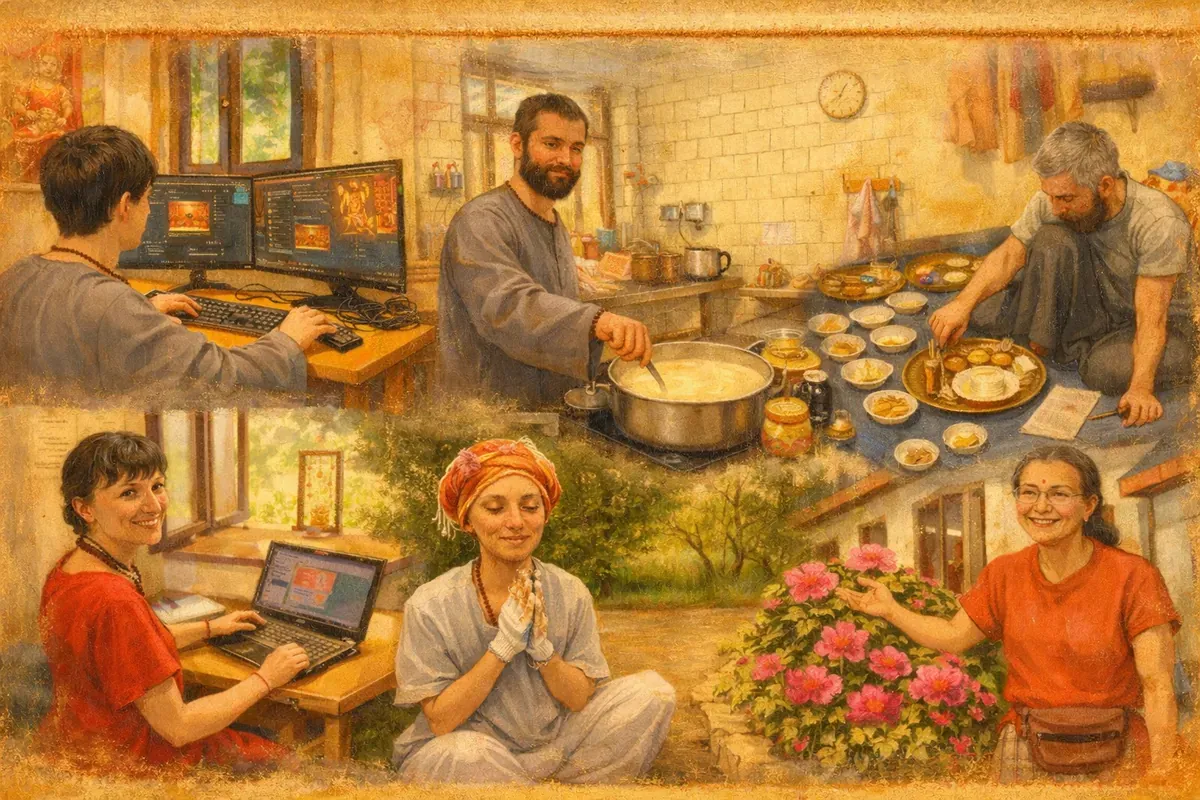
The Dharma group is a microcosm of a traditional monastic community (matha, ashram), adapted for laypeople (grihastha) practicing in the conditions of modern society while maintaining the fundamental principles of the parampara. Foundation and Development The Dharma group in Belarus was founded in 2019 after the Guru's visit to Minsk, the capital of the Republic of Belarus. This event marked the establishment of a direct link between the classical Indian tradition and spiritual seekers in Belarus. In January 2024, the Guru officially bestowed upon the group the spiritual name "Anugraha" (Divine Grace), which in the traditi
SatsangUpasanaDharma groupsCollective PracticeSeva
item image

Invitation to Service in the Community

author •date 06.03.2026 •duration 5 min. reading •views 42 просм.

Seva (Skt. sevā) — service, selfless activity for the benefit of the spiritual community, the Teacher, and the Dharma. The word sevā is defined as "respectful service," "devoted fulfillment of duties," or "worship through action." Etymologically, seva points to the voluntary dedication of oneself to a higher goal, where service becomes a form of spiritual practice and an expression of inner devotion. Seva represents a fundamental principle of spiritual practice in the tradition of Sanatana Dharma, where service is seen as a direct path to realizing the non-dual nature of reality. In the context of Advaita Vedanta, service

item image

Invite a monk

author •date 06.03.2026 •duration 5 min. reading •views 41 просм.

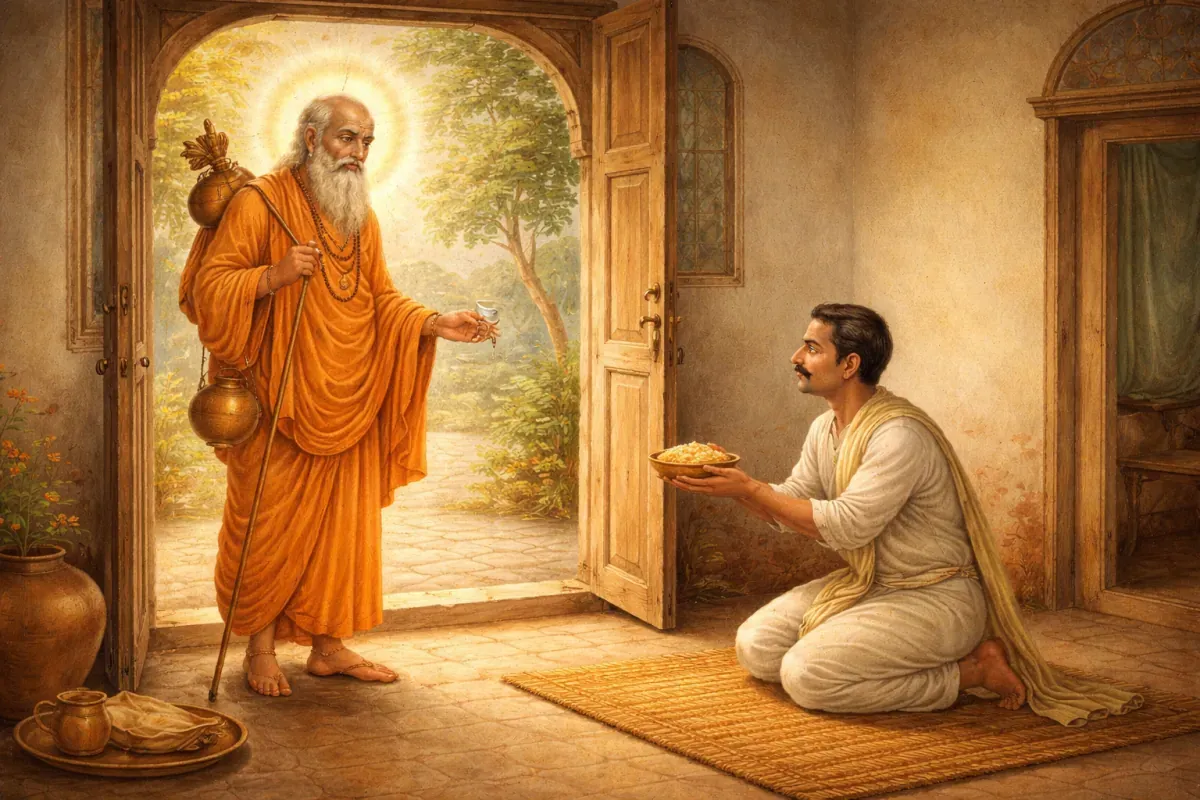
In the Sanskrit tradition, inviting a monk into the home is denoted by the concept of atithi-satkāra (atithi-satkāra) — "honoring the guest," where the root sat means "true, good," and kāra means "doing, creating." Meeting a sannyasi is viewed as sādhu-darshana (sādhu-darśana) — "the vision of a saint," which in itself is an act of spiritual purification and receiving a blessing. The veneration of the renounced constitutes a fundamental practice of Sanatana Dharma, sanctified by the authority of sacred texts. The "Taittiriya Upanishad" (I.11.2) prescribes: "Let your mother be a deity, let your father be your deity, let you

item image

Monastic community of sannyasis

author •date 06.03.2026 •duration 6 min. reading •views 35 просм.

Mentors and preachers of the World Community of Sanatana Dharma with blessings for preaching activities Mentors of the Teaching Mahamandaleshwar Shri Guru Swami Vishnudevananda Giri Spiritual teacher (authorized to initiate into sannyasa) in the tradition of Advaita Vedanta and yoga, sadhu, realized jnani in the lineage of Advaita Vedanta, philosopher, theologian, writer, pilgrim-traveler, having disciples among monks and laypeople worldwide – in Russia, Ukraine, Belarus, Europe, USA, India, Nepal. Mahamandaleshwar Swamini Ananda Lila Giri Mahamandaleshwar of the Juna Akhara order (India), abbot of the ashrams of the World

SanghaSannyasi
item image

Organization of the Karma-Sannyasi Ashram

author •date 27.01.2026 •duration 5 min. reading •views 49 просм.

The term "Ashram" (Skt. āśrama) dates back to the verbal root śram, meaning "to make an effort," "to practice asceticism," "to labor." In the classical understanding of the Vedic tradition, it is a place of intense spiritual labor and austerity. Etymologically, this word is also associated with the prefix ā (towards), which is interpreted as "a place where a person completely strives towards God." Thus, a karma-sannyasi ashram is a sacred space for those who practice "renunciation in action," following the path indicated in the Bhagavad Gita (Chapter 5, verse 2): "Sannyasa (renunciation) and karma-yoga (the yoga of action)

Ashram
item image

Organization of the Dharma Center

author •date 27.01.2026 •duration 4 min. reading •views 40 просм.

The term "Dharma Center" (Skt. Dharma-kendra) is a combination of two fundamental concepts. Dharma (from the root dhṛ — "to hold," "to support," "foundation") is the cosmic law that preserves the universe from chaos. Kendra (Skt. kendra) means "center," "core," or "focus of a circle." Thus, a Dharma Center is not merely a meeting place, but a sacred geographical focus that maintains the field of spiritual practice (sadhana) in a specific region. In the tradition, it is regarded as an "embassy" of the spiritual world within social reality, a crystallization point of the teaching (Siddhanta). I. Canonical Status Within the s

Deity AttributesMissionEthicsDharma centersDharma groupsSanatana Dharma
item image

Consultation with a monk

author •date 27.01.2026 •duration 6 min. reading •views 42 просм.

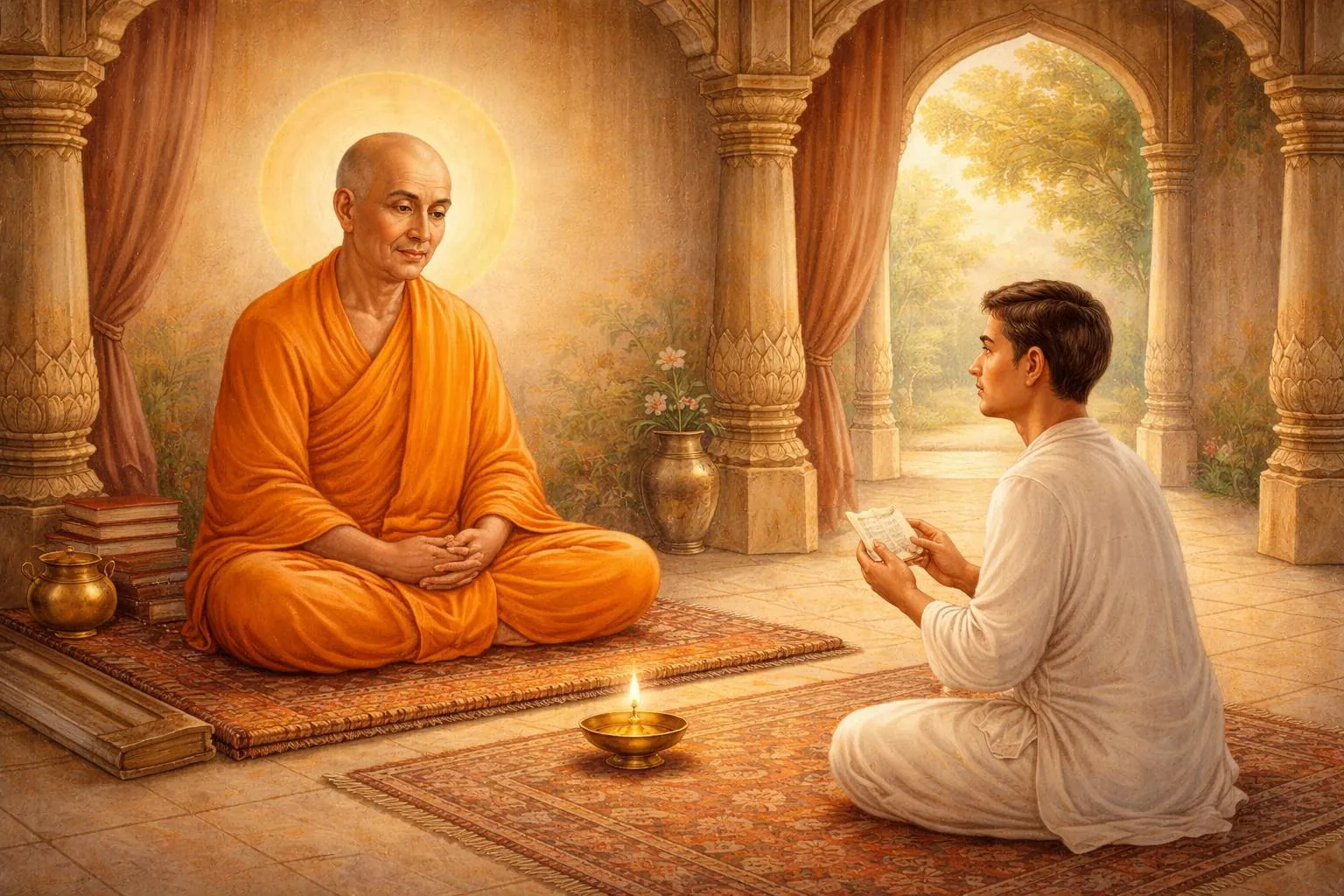
In the Sanatana Dharma tradition, the institution of monastic mentorship holds a central position in the system of knowledge transmission. A monk (sannyasi, sadhu, muni) represents a living embodiment of the renounced path (sannyasa-ashrama) and acts as an intermediary between the sacred knowledge of the shastras and the spiritual aspiration of the disciple. A sannyasi monk in the Shaivite tradition represents jiva-dasha — the state of living liberation. He is not bound by worldly obligations or social conventions. His authority does not stem from worldly power or position, but from tapas (spiritual power accumulated throu

item image

To come to the ashram

author •date 27.01.2026 •duration 4 min. reading •views 119 просм.

Ashrama (āśrama) is a Sanskrit term denoting a sacred place of spiritual endeavor, an abode for hermits and seekers of Truth. In traditional Sanskrit dictionaries, an ashrama is defined as the "abode of sages" (ṛṣi-nivāsa), "place of austerity" (tapovana), or "house of the Guru" (guru-gṛha). It is a space hallowed by the presence of a realized Teacher and filled with the energy of continuous spiritual practice by generations of sadhus. An ashram is not merely a building or a geographical point. It is a living spiritual organism, a sacred space where all dimensions of the religious life of Sanatana Dharma intersect. It is i

item image

To Become a Monk

author •date 27.01.2026 •duration 8 min. reading •views 118 просм.

Sannyasa (Skt. saṃnyāsa) — from the root nyās ("to leave," "to renounce") with the prefix sam ("completely," "perfectly") — signifies the total renunciation of worldly attachments for the sake of achieving moksha, the supreme Liberation. This is the fourth and final stage of life (āśrama) in the classical system of varnashrama-dharma, described in the ancient dharmashastras. According to the Manu Smriti (VI.33): “Having renounced all attachments, studying the Vedas, dwelling in self-control and non-harming, occupied with the contemplation of Brahman — such is the path of the sannyasin.” In the tradition of Advaita Vedanta,

Sannyasi
item image

Request a homa

author •date 23.01.2026 •duration 6 min. reading •views 37 просм.

Homa (Skt. homa) is a sacred fire sacrifice, one of the fundamental Vedic rituals of worshipping the Divine through the element of fire (Agni). The term originates from the Sanskrit root "hu" (hu), meaning "to pour," "to sacrifice," or "to offer." In the Vedic tradition, homa is also referred to as yajna (yajña — sacrifice), agnihotra (agnihotra — fire offering), or havan (havan). Etymologically, homa represents the act of sacred libation into the fire, where Agni acts as a mediator between the human and divine dimensions of existence. Definition Homa is an ancient Vedic ritual of fire sacrifice in which fire (Agni) is inv

Articles
Vidya AI
Search
Lectures
World Community of Sanatana Dharma
The world community unites people from many countries who belong to Sanatana Dharma (Hinduism) and practice yoga and meditation under the guidance of the enlightened Master of practical Advaita Swami Vishnudevananda Giri Maharaja.
Join Us
support@sanatanadharma.world