

Ashta-avarana-diksha (aṣṭa-āvaraṇa-dīkṣā) is the initiation into the eight protective coverings. The term ashta (aṣṭa) means "eight," and avarana (āvaraṇa) comes from the root vṛ (vṛ), meaning "to cover," "to surround," or "to protect," with the prefix ā (ā) indicating direction toward the center. Avarana denotes a protective shield, a shell, or a sacred garment.
Diksha (dīkṣā) means initiation or consecration. The term is formed from the roots dā (dā), "to give," and kṣi (kṣi), "to destroy" or "to annihilate." Diksha simultaneously bestows spiritual power and destroys karmic obstacles, creating the conditions for spiritual advancement.
The Doctrine of the Eight Avaranas in the Shaiva Tradition
The concept of the ashtavaranas is rooted in Lingayata-darshana (liṅgāyata-darśana)—the philosophical system of Virashaivism developed by Basava and Allama Prabhu in the 12th century. The Shunya Sampadane, a central text of the tradition, describes eight forms of grace through which Shiva protects and guides the devotee:
1. Guru (guru) — The Teacher as the living embodiment of Shiva. The Shiva Purana (7.2.37.11) proclaims:
"The Guru is Shiva, Shiva is the Guru—they are one; it should not be understood otherwise."
Through guru-avarana, guru-tattva-sambandha (the connection with the Teacher principle) is established, acting as a conduit for shakti-pata.
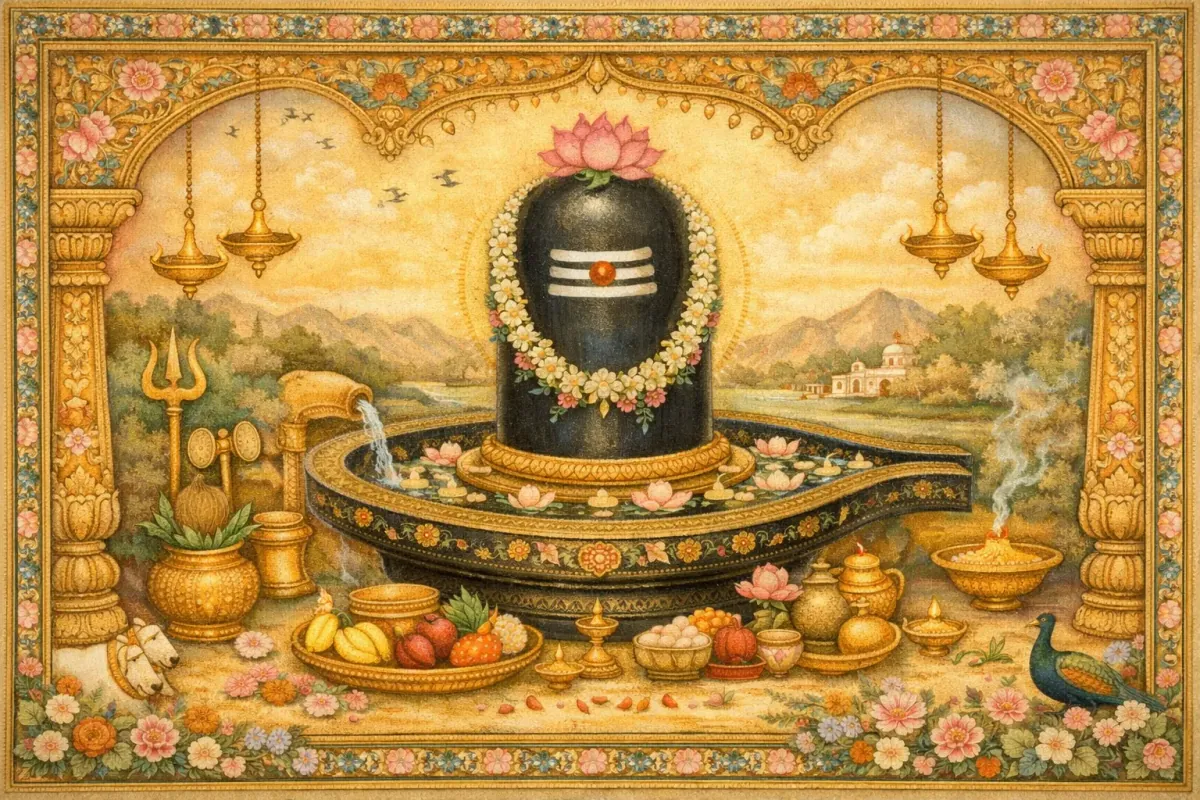
2. Linga (liṅga) — The sacred symbol of the Absolute, the substantial form of the formless Brahman. The Linga Purana (1.3.1-2) defines it as follows:
"The Lingam is called That in which the world dissolves during pralaya. The Lingam is the Supreme Brahman; the Lingam is the highest tapas."
A personal lingam, consecrated by the Guru and given to the student, becomes ishtadeva-murti—the form of the chosen deity and the center of daily upasana.
3. Jangama (jaṅgama) — Literally "moving," it refers to the living carriers of the tradition. Derived from the root gam (to go) with the prefix jan. In the Lingayata tradition, jangama indicates the sadhu-sangha—the community of saints and monks through whom the dynamic aspect of Shiva is manifested. Basava Vachana states:
"Sthavara-lingam [the immobile lingam] is the temple; jangama-lingam is the body of the saint; prana-lingam is the breath of Shiva in everything."
4. Padodaka (pādodaka) — Consecrated water. Literally "water from the feet"—pada (foot), udaka (water). In the context of diksha, this is charanamrita (caraṇāmṛta)—the nectar of the feet, water collected after the ritual bathing of the lingam, saturated with its vibrational energy. The Padma Purana describes:
"Shiva's Padodaka destroys all sins."
5. Prasada (prasāda) — Consecrated food. From prasad (to be gracious) with the prefix pra. Prasada is not just food offered to a deity, but a substance transformed into a divine essence through the process of nivedana (offering). The Bhagavad Gita (3.13) states:
"The saints who eat the remnants of sacrifice [prasada] are freed from all sins."
6. Bhasma (bhasma) — Sacred ash. From the root bhas (to shine, to burn). Bhasma is agni-shuddha-dravya—a substance purified by fire, symbolizing vairagya (dispassion) and mrita-sanjivani (the revival of the dead). The Bhasma Jabala Upanishad proclaims:
"A person covered in ash on all limbs of the body becomes Rudra."
7. Rudraksha (rudrākṣa) — "The eye of Rudra," sacred beads. Rudra is one of the names of Shiva, and aksha means "eye" or "bead." The Shrimad Devi Bhagavatam (11.8) describes its origin:
"Rudrakshas, originating from the eyes of Rudra, destroy sins."
The Rudraksha functions as a mantra-dharaka—a carrier of the mantra, physically embodying the vibration of Shiva.
8. Mahamantra (mahāmantra) — The great mantra of Shiva. Maha means "great," and mantra comes from the roots man (to think) and tra (to protect)—"that which protects the mind." In the Shaiva tradition, the mahamantra is usually the panchaksari—the five-syllable mantra Om Namah Shivaya. Tirumular's Tirumantiram (verse 2690) states:
"The five syllables are the body of Shiva; he who utters them becomes Shiva himself."
The Principle of the Protective Mandala
The eight avaranas form the ashtadala-padma (eight-petaled lotus), an energetic mandala surrounding the practitioner. Each avarana corresponds to one of the eight directions of space, creating omnidirectional protection.
This structure functions at the level of the sukshma-sharira (subtle body), forming what the Tantric tradition calls a kavaca-yantra—a protective geometric structure. The Tantra Sara describes:
"Just as the shell of a tortoise protects its body, the avarana-shakti protects the sadhaka from astral intrusions."
Protection is necessary because a beginning practitioner, by opening their subtle channels, becomes vulnerable to pishacha-badha (possession by spirits), drishti-dosha (the evil eye), and karma-vipaka-prabalatvam (the intensification of karmic fruits).
Divya-nama: The Spiritual Name
The transmission of a spiritual name represents a nava-janma—a new birth into a spiritual family. The Chandogya Upanishad (6.1.1) begins with the story of Shvetaketu, who, upon returning from his studies, receives a new understanding and effectively a new identity.
The spiritual name does not completely replace the mundane name but creates a dual identity: a social personality for vyavaharika (relative reality) and a spiritual personality for paramartha (ultimate reality). The name is chosen by the Guru based on:
- Svabhava-darshi — insight into the true nature of the disciple
- Ishtadeva-sambandhi — connection with the chosen deity
- Guna-prakashi — manifested qualities
Gradation of Initiations in the Parampara
Ashta-avarana-diksha occupies a specific place in the hierarchy of initiations:
Stage One: Prapatti-diksha (Taking Refuge) establishes the basic connection with the tradition.
Stage Two: Ashta-avarana-diksha creates the protective structure and grants a spiritual identity.
Stage Three: Ashrama-diksha (initiation into a way of life) concretizes the path of practice.
Stage Four: Brahma-mantra-diksha transmits the highest liberating mantra.
The Necessity of Protection on the Spiritual Path
A Western seeker, raised in a rationalistic paradigm, may perceive the concept of spiritual protection as superstition. However, traditional yogic psychology possesses a profound understanding of the subtle dimensions of reality, which modern psychology is only beginning to explore through concepts like the collective unconscious (Jung) and morphogenetic fields (Sheldrake). When you begin spiritual practice—meditation, pranayama, mantra-japa—you activate nadi-shodhana, the purification of subtle energy channels. This makes you more sensitive and permeable. You become like a radio receiver with an expanded range: you pick up not only sublime frequencies but also destructive vibrations.
These destructive influences can manifest as:
Internal obstacles: Intensification of vasanas (subconscious impressions), the surfacing of pratyaya (subconscious content), and the activation of samskaras (karmic imprints). What psychoanalysis calls the "return of the repressed," yoga understands as karma-vipaka—the ripening of karmic seeds.
External obstacles: The negative influence of envious people (drishti-dosha), encounters with destructive astral entities (bhuta-preta-pishachas), and the impact of collective negative fields in places with heavy energy. Ashta-avarana-diksha creates a raksha-mandala—a protective circle within which the practitioner can develop safely, much like a fetus is protected by the placenta in the womb.
The Eight Protective Coverings: Practical Dimension
Each of the eight avaranas has a specific practical application in daily sadhana:
1. Guru-avarana: A Living Connection to the Tradition
Receiving guru-avarana means more than just symbolic recognition of a teacher; it is the establishment of guru-bhava—an internal connection with the Guru principle. This creates a flow of spiritual power descending through an unbroken lineage of teachers.
Practically, this means: when you face an obstacle in practice, you can call upon this guidance through guru-smarana (remembrance of the Guru). The Guru becomes an internal compass, the antar-guru (inner teacher), directing your actions.
2. Linga-avarana: A Personal Altar of the Absolute
Receiving a personal lingam consecrated by the Guru transforms your home into a mini-tirtha (a small holy place). The lingam is not an idol in the Western sense, but a yantra-rupa—a geometric form that concentrates divine energy.
Daily linga-puja becomes the center of your spiritual life. You establish a nitya-sambandha (constant connection) with the lingam, which sustains your practice even during periods of internal dryness.
The lingam also serves as a dharana-alambana—a support for concentration in meditation. Contemplating its form leads to ekagrata (one-pointedness of mind).
3. Jangama-avarana: The Power of the Spiritual Community
Jangama-avarana deepens your integration into the sangha. This implies not just social membership, but the recognition that other practitioners, especially monks and advanced disciples, are shiva-rupas—forms of Shiva.
Practically, this creates a supportive field. When your personal motivation wanes, the sangha-shakti (power of the community) supports you. When you doubt the path, observing the progress of others inspires you. Jangama-avarana also involves seva-bhava (the spirit of service) to the community, which transforms egoic practice into loka-sangraha—service to the world.
4. Padodaka-avarana: The Principle of Purification
Charanamrita, received after bathing the lingam, represents the principle of shuddhi (purification). Consuming consecrated water is not a magical act, but a psychosomatic ritual that anchors the intention of internal purification at the bodily level.
Water, as a prana-dharaka (carrier of life force), absorbs the vibration of the lingam during abhisheka (ritual bathing). By taking it, you physically interiorize (antar-karana) the blessing.
In daily practice, you can create padodaka yourself during morning puja, using it for purification before meditation or at moments when you feel negative influence.
5. Prasada-avarana: Consecration of Food
Prasada-avarana transforms your relationship with food from utilitarian consumption into yajna-karma (sacrificial action). Before every meal, you offer the food to the deity through the Anna-purna mantra, then accept it as prasada.
This creates a sacralization of the mundane. Food ceases to be mere fuel for the body and becomes brahma-dravya—divine substance that nourishes not only the physical but also the subtle body. The practice of prasada also cultivates gratitude, eliminating bhoga-vasana (passion for sensory pleasures) and transforming it into bhakti-rasa (the taste of devotion).
6. Bhasma-avarana: Symbol of Transformation
Sacred ash applied to the body (usually on the forehead, arms, and chest) serves as a constant reminder of anitya (impermanence). Bhasma is what remains after all material things have burned, symbolizing paramarthika-tattva—the absolute reality that remains after the destruction of everything transient.
Wearing bhasma is also an abhijñana—a sign of belonging to the Shaiva tradition. It is a public declaration of your spiritual identity, creating a daivanama (divine signature) on your body.
7. Rudraksha-avarana: Wearing the Vibration of Shiva
A Rudraksha-mala (prayer beads), consecrated by the Guru and given to you, becomes your constant companion. You wear them on your neck or wrist, use them for japa, and keep them at the altar. Each rudraksha bead has a certain number of mukhas (faces), creating a specific energetic effect. The most common is the pancha-mukhi-rudraksha (five-faced), corresponding to the five faces of Shiva and the five elements.
Wearing rudraksha creates savyayya-darshana—a right-sided circulation of energy that protects against negative influences. When used for japa, the rudraksha amplifies the mantra (mantra-vriddhi), acting as a resonator. Tradition dictates treating rudraksha with reverence: do not wear it in impure places, remove it before sleep, and periodically cleanse it with water, milk, and turmeric.
8. Mahamantra-avarana: The Living Transmission of Sound
The transmission of the mahamantra is the culminating moment of diksha. The Guru performs karna-mantra—whispering the mantra directly into the student's ear. This is not just an informational transfer of words, but shabda-shakti-sanchara—the transmission of sonic power.
A mantra transmitted in this way becomes a caitanya-mantra—a living, awakened mantra, as opposed to a mantra simply read in a book. Shabda Brahman—the sonic Absolute—is activated in your consciousness.
After receiving the mahamantra, you commit to performing daily nitya-japa—a constant practice of repetition, usually at least one mala (108 repetitions) per day. This creates mantra-dhyana—a constant internal vibration that continues even when you are not consciously repeating the mantra.
The mahamantra becomes your sahaja-dhyana (natural meditation) and ishta-mantra (personal mantra), through which you establish a direct connection with the ishta-devata (chosen deity).
The Spiritual Name: A New Identity in Dharma
Receiving a spiritual name from the Guru represents a spiritual rebirth. This name reflects not your mundane personality with its profession, social status, and family ties, but your svabhava-tattva—your essential nature, as seen by the Guru.
In daily life, you may use your spiritual name within the context of the sangha, while retaining your mundane name for social interactions. Some practitioners transition entirely to their spiritual name, legally changing their documents, especially upon taking monastic vows.
It is important to understand that a name is not just a label, but a shabda-yantra (sound yantra) that shapes your identity. Regularly reciting your spiritual name in meditation or before practice activates the energy embedded within it.
Conditions and Preparation for Ashta-avarana-diksha
Ashta-avarana-diksha is not an initial stage but follows a certain preparation:
Prerequisite: You must formally accept the Creed of Refuge (prapatti-diksha) from a monk, either online or in person. This establishes the basic guru-shishya-sambandha, without which the transmission of the avaranas is ineffective.
Registration: You register with the ceremony coordinator (Tejomayi), stating your intention to receive diksha.
Dakshina (dakṣiṇā) — Ritual Offering: Tradition requires the student to bring guru-dakshina—a gift to the teacher for the transmission. This is not a payment for a service, but an expression of gratitude and sacrifice. The size of the dakshina is determined according to one’s means, usually in the form of a donation to the monastery.
Dakshina has a deep meaning: by giving something material, you create space to receive something spiritual. This follows the principle of aparigraha (non-attachment), showing that you are ready to let go of the material for the sake of the immaterial.
The Diksha Ceremony: Process and Experience
The ashta-avarana-diksha ceremony itself is a sacred act, usually lasting 1–2 hours. It can be conducted individually or for a group of students simultaneously, online or in physical presence at an ashram.
Structure of the ceremony:
Purva-puja (pūrva-pūjā) — preliminary worship to attune the space.
Guru-vandana (guru-vandanā) — glorification of the Guru and the lineage.
Sankalpa (saṃkalpa) — formal declaration of intent to receive diksha.
Ashtavarana-pradana (aṣṭāvaraṇa-pradāna) — sequential transmission of the eight avaranas with an explanation of each.
Nama-dana (nāma-dāna) — the bestowing of the spiritual name.
Mantra-upadesha (mantra-upadeśa) — the transmission of the mahamantra whispered into the ear.
Ashisha (āśiṣa) — final blessing from the Guru.
During the ceremony, you may experience various states: bhakti-bhava (waves of devotion), vishuddha-cetana (extraordinary clarity of consciousness), ananda-lahari (waves of bliss), or simply shanti (deep peace). It is important to understand that the effect of diksha is not limited to the moment of the ceremony. Diksha-shakti—the power of initiation—continues to work over months and years, gradually transforming your consciousness.
After Diksha: Integration and Practice
Receiving ashta-avarana-diksha opens a new stage of the path. You are now not just a mumukshu (seeker of liberation) but a dikshita (an initiate) with formal status in the parampara.
Practical Obligations:
Daily Linga-puja — worship of the received lingam in the morning and/or evening.
Nitya-japa — daily repetition of the mahamantra, at least one mala.
Wearing Rudraksha — constant wearing of the beads as a reminder of the connection to the tradition.
Applying Bhasma — application of sacred ash before practice or on special days.
Sangha-seva — service to the community in an accessible form. These practices are not added to your life as an extra burden but are integrated into it, gradually transforming the entire structure of your existence.
The Path of Further Deepening
Ashta-avarana-diksha is not a final destination, but an intermediate station on the way. After it, the possibility for further initiations opens up:
Ishta-devata diksha — initiation into the image of a deity and a mantra for upasana (worship). Formal acceptance of one of the life stages (grihastha, karma-sannyasa, brahmacharya, vanaprastha), which concretizes your sadhana and social role in the tradition.
Brahma-mantra-diksha — initiation into the supreme liberating mantra.
Sannyasa-diksha — for those who feel a calling to total renunciation, the highest initiation into monkhood. Each subsequent diksha deepens the guru-shakti-sambandha—the energetic connection with the Guru and the parampara—bringing one closer to siddhi (perfection of practice) and moksha (liberation).
Conclusion
Ashta-avarana-diksha creates what can be called a sadhana-kshetra—a consecrated field of practice. Within this field, protected by the eight coverings, you can safely undergo citta-vritti-nirodha—the calming of the waves of the mind, leading to samadhi (the state of oneness). Without this protection, the path would be like sailing in a stormy ocean without a vessel. With the ashtavarana-kavaca—the protective armor of the eight coverings—you gain the stability (sthairyatva) and certainty (nishcaya) necessary for a deep immersion into practice.
Accepting ashta-avarana-diksha is not just the end of the preparatory stage and the beginning of true practice, but a deepening of the path already begun. It is a formal recognition that you are serious about spiritual transformation and ready to accept the support of the tradition in its entirety.
The path is open to those who have completed preliminary preparation and are ready to take the next step. Covered by the Shiva-shakti-avarana (the power of Shiva and Shakti), you can confidently move from ajñana (ignorance) to jñana (knowledge), from bandha (bondage) to moksha (liberation).
You can ask questions regarding the ritual to the ceremony coordinator, Tejomayi.
Om Namah Shivaya — May all beings be protected, may all beings be liberated.
