

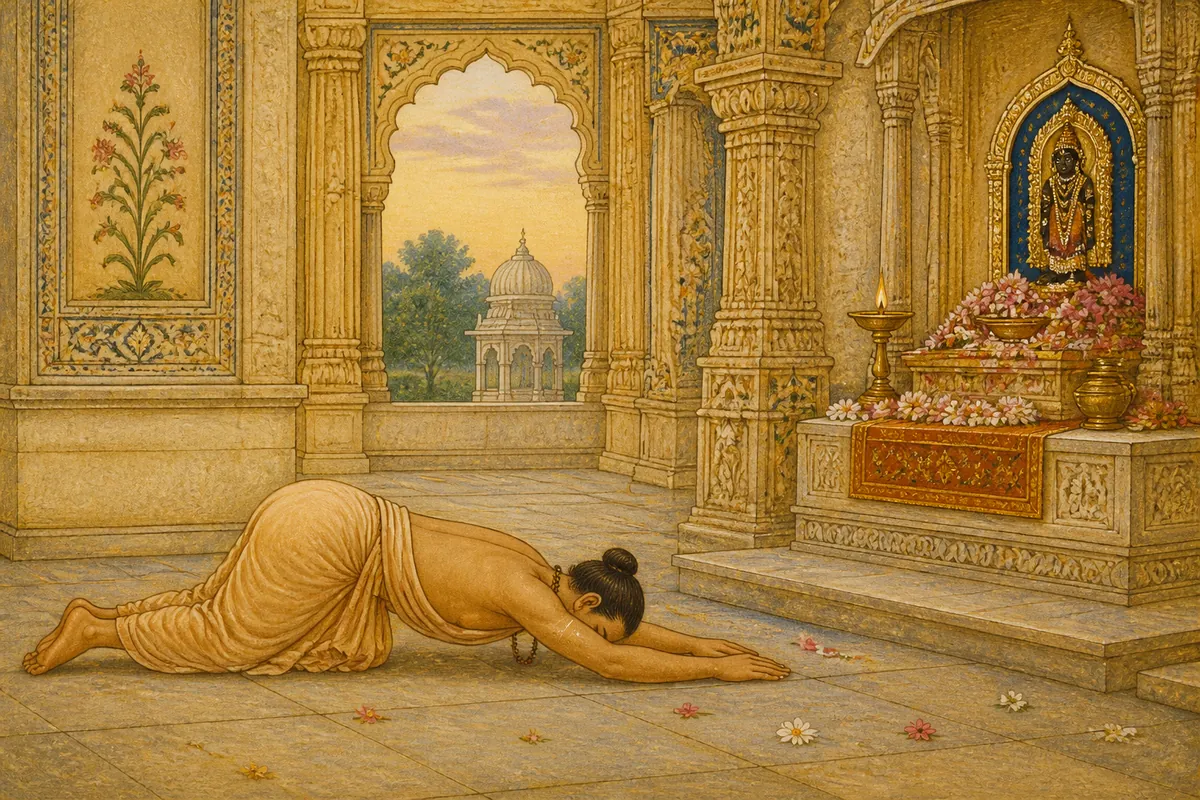
Prostration (pada-namaskara, Sanskrit pāda-namaskāra) — a bow at the feet of the Guru, a saint, or an image of God — is one of the basic sadhanas of the spiritual path in Sanatana Dharma. It is present in daily sadhana, in pilgrimage, in darshan, and in ritual. In the tradition, prostration is among the obligatory preliminary practices (purva-sadhana, Sanskrit pūrva-sādhana), the performance of which lays the foundation for deeper levels of contemplation.
The Spiritual Meaning of Prostration
The word namaskara is formed from namas (“bow,” “reverence”) and kāra (“action,” “doing”). In the Vedic texts, worship at the feet of the teacher — pada-namaskara — stands among the principal acts of reverence: offering flowers, washing the feet, listening to the teaching.
Prostration is an offering of the three bodies: the physical body, speech, and mind. The practitioner offers to the saints and gods of the lineage everything he or she possesses: the body that lies down upon the earth, the prayer uttered by the lips, and the inner visualization that occupies the mind. This is precisely why the practice belongs to the section of tantra — it engages all three dimensions of the being simultaneously. The work takes place at the level of energy.
According to the Guru’s teaching, taking Refuge in the Three Jewels means constantly directing the mind toward the Guru, the Dharma, and the Sangha — toward one’s own three enlightened bodies. In prostration, this inner orientation takes the form of bodily action: the practitioner turns to the Guru-parampara with the whole being — mind, speech, and body.
During prostration, the spiritual seeker prostrates before his or her higher “Self” — before that which is dearer than anything else in the world. This act opens the possibility, through the outer form of reverence, of entering a state of union overflowing with devotion.
Prostration is the main antidote to pride. Subramuniyaswami, in “Dancing with Siva,” describes the first stage of the path — charya (Sanskrit caryā), or dasa-marga — as “humble service, temple attendance, honoring holy people.” This is a path on which the body moves toward the earth, and the ego loses its point of support. Pride, as a rule, resists this simple action most strongly. When the body lies down on the earth, it has nothing to hold on to.
Pilgrims in Tibet, India, and other countries of Vedic culture make their way to a holy place by measuring each step with the length of their own body. Such a pilgrimage, according to the teaching of the saints, purifies the karma of this life and of many past births.
Technique of Performance
Preparation
The practice is performed before the altar. Clothing should be clean and loose. Stand facing the altar. The body is relaxed, the attention is focused.
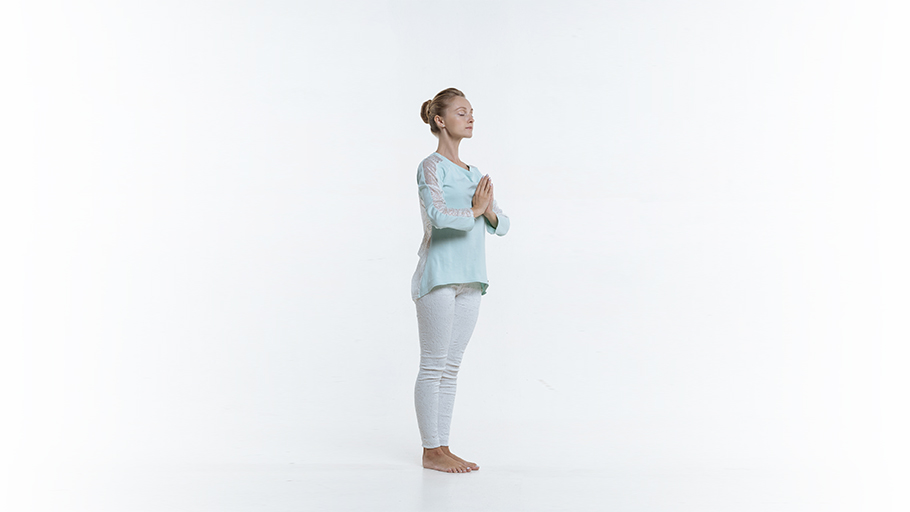
Step 1. The “Lotus” Mudra
Fold your hands in padma-mudra (Sanskrit padma-mudrā) — the lotus mudra. The fingers are spread and opened; only the little fingers, thumbs, and wrists touch, forming the shape of an open flower — a bowl.
Step 2. Prayer of Refuge
Raise your hands, folded in the mudra, above your head. Recite the prayer:
“Om. I take refuge in the Three Jewels. I ask to be led to liberation and enlightenment.”
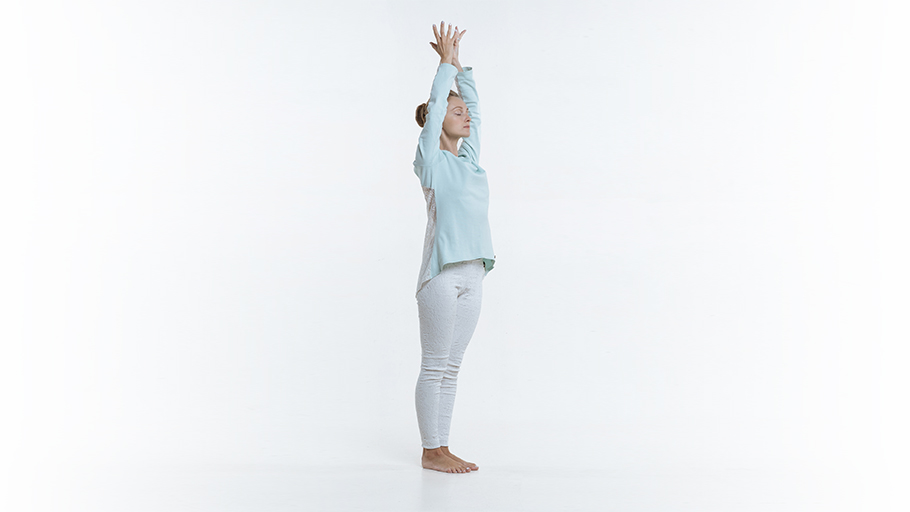
Step 3. Visualization of Nectar
Imagine: the blessings of the siddhas, the rishis, and the Guru-parampara descend in the form of a pillar of white light and fill the bowl of your hands, transforming into nectar — amrita (Sanskrit amṛta). The nectar is transparent, saturated with the power of blessings.
Visualization is an energetic action: one energy purifies another. According to the Guru’s teaching, nectar is condensed light that dissolves obstacles and opens the chakras.
Step 4. Touching the Chakras
Bring the bowl to the crown of the head — the sahasrara chakra (Sanskrit sahasrāra-cakra). The nectar penetrates the head, fills and purifies this center.
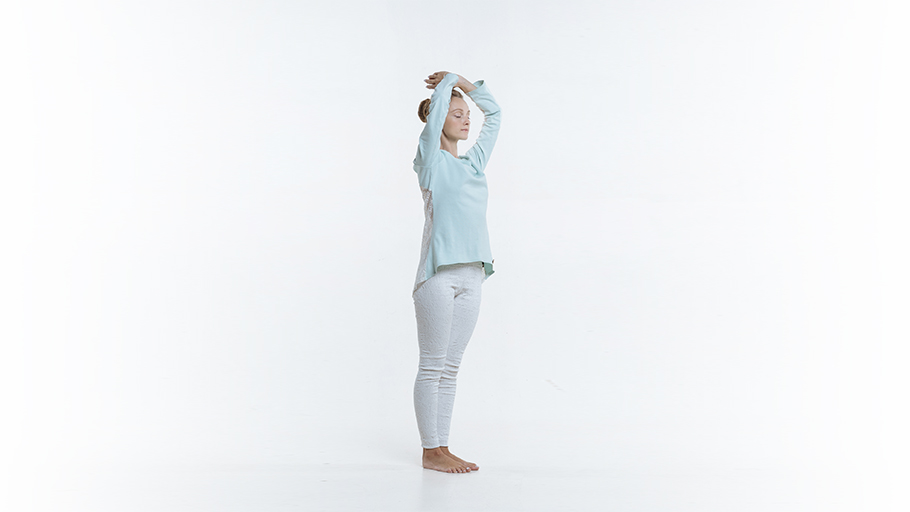
Then — to the space between the eyebrows: ajna chakra (Sanskrit ājñā-cakra). The nectar purifies the mind and intuition.

Next — to the throat: vishuddha chakra (Sanskrit viśuddha-cakra). Speech is purified.
Then — to the chest: anahata chakra (Sanskrit anāhata-cakra). The heart center is purified.
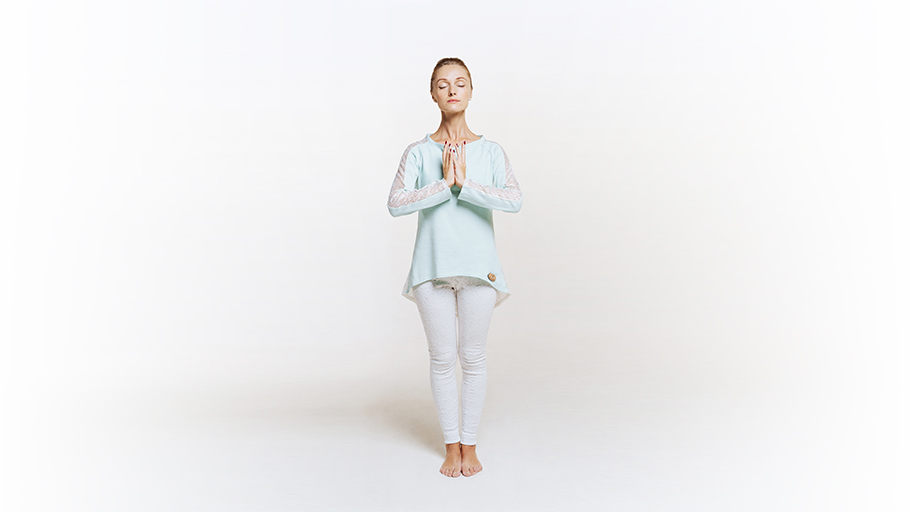
Finally — to the navel: manipura chakra (Sanskrit maṇipūra-cakra). The will and life force are purified.
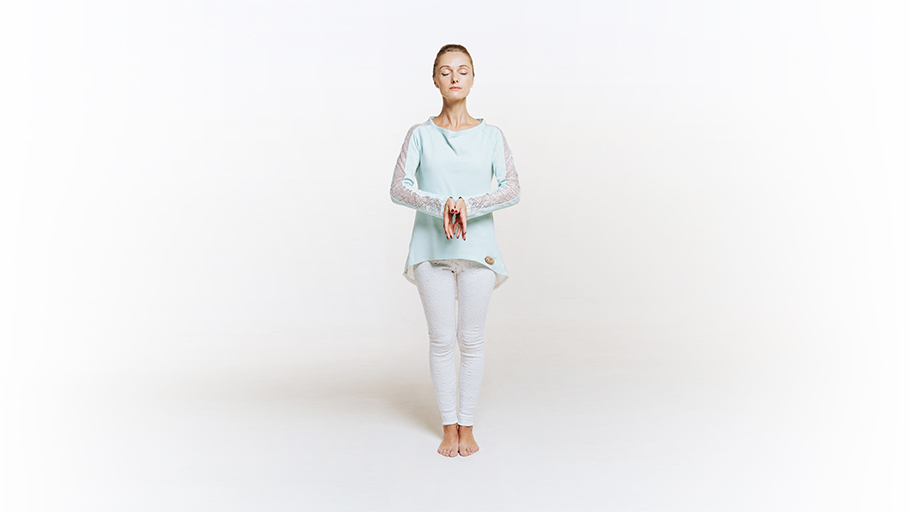
Be aware: the mind, energy, and body are purified.
Step 5. Full Prostration
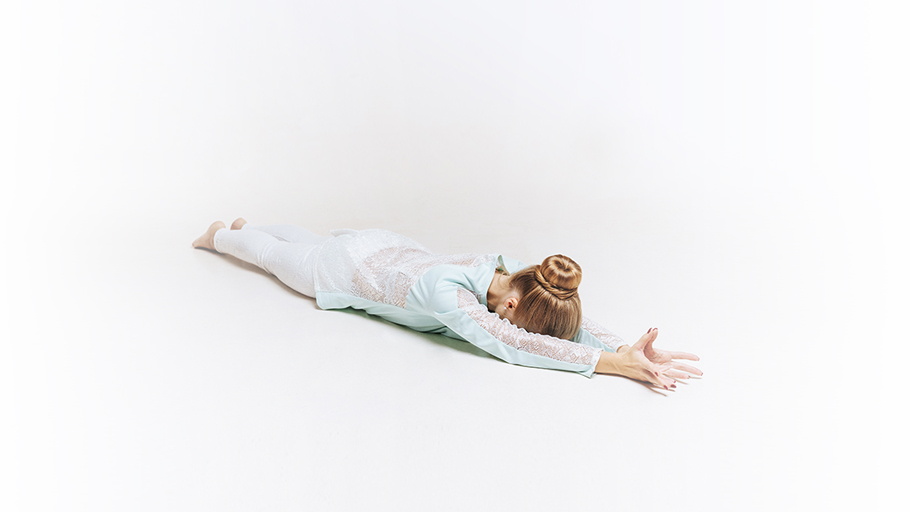
Kneel down, extend your hands, folded in the mudra, forward — toward the altar — and lie down at full length. The body is horizontal. The forehead touches the floor. The hands in the mudra are extended toward the altar.
At this moment, all accumulated merits — of body, speech, and mind — are directed for the benefit of all living beings: for the spread of the Dharma, which liberates from the cycle of births and deaths (samsara, Sanskrit saṃsāra). The hands folded in the mudra and turned toward the altar are a sign that the practice is performed without a selfish aim.
Step 6. Rising and Repetition
Rise and return to the standing position. This is one complete cycle. Return to step 1 and repeat.
Number of Repetitions and Place in Sadhana
According to the rule of the basic practices of the teaching, it is necessary to perform 10,000 prostrations. When performing 108 prostrations daily, the full cycle takes about four months.
The number 108 in Sanatana Dharma is a sign of spiritual completeness: 108 names of Shiva, 108 Upanishads, 108 beads in a rudraksha rosary. 108 prostrations a day provide a steady flow of purification — without strain.
Prostrations are purva-sadhana, preliminary purification practices. They prepare the mind and the energy body for deeper work. As they are performed, deep faith and openness to the blessings of the saints arise in a person. The practice gradually burns away egoism and ignorance.
It is best to perform it at the same time every day. Concentration on prayer and visualization, as well as the purity of the place and the body — this is what determines the depth of the result.
