Namaste!

item image

Main Mantras

author •date 29.07.2026 •duration 12 min. reading •views 29 просм.

Gayatri Mantra oṁ bhūr bhuvaḥ svaḥ tat savitur vareṇyaṁ bhargo devasya dhīmahi dhiyo yo naḥ pracodayāt OM BHUR BHUVAH SVAHA TAT SAVITUR VARENYAM BHARGO DEVASYA DHIMAHI DHIYO YO NAH PRACHODAYAT Translation: “We meditate upon the divine light of the sun of spiritual consciousness. May it illuminate our intellect, just as radiant sunlight dispels darkness.” The Gayatri Mantra is found in the Rigveda (3.62.10) and is traditionally associated with the rishi Vishvamitra. It is addressed to Savitar, the divine solar principle that awakens the intellect. It is one of the most revered Vedic prayers. Mahamrityunjaya Mantra oṁ tryamb
Mantra-sadhanaGayatri-mantraMantrasMantraSaguna-upasanaUpasana
item image

How to perform prostrations

author •date 26.05.2026 •duration 5 min. reading •views 16 просм.

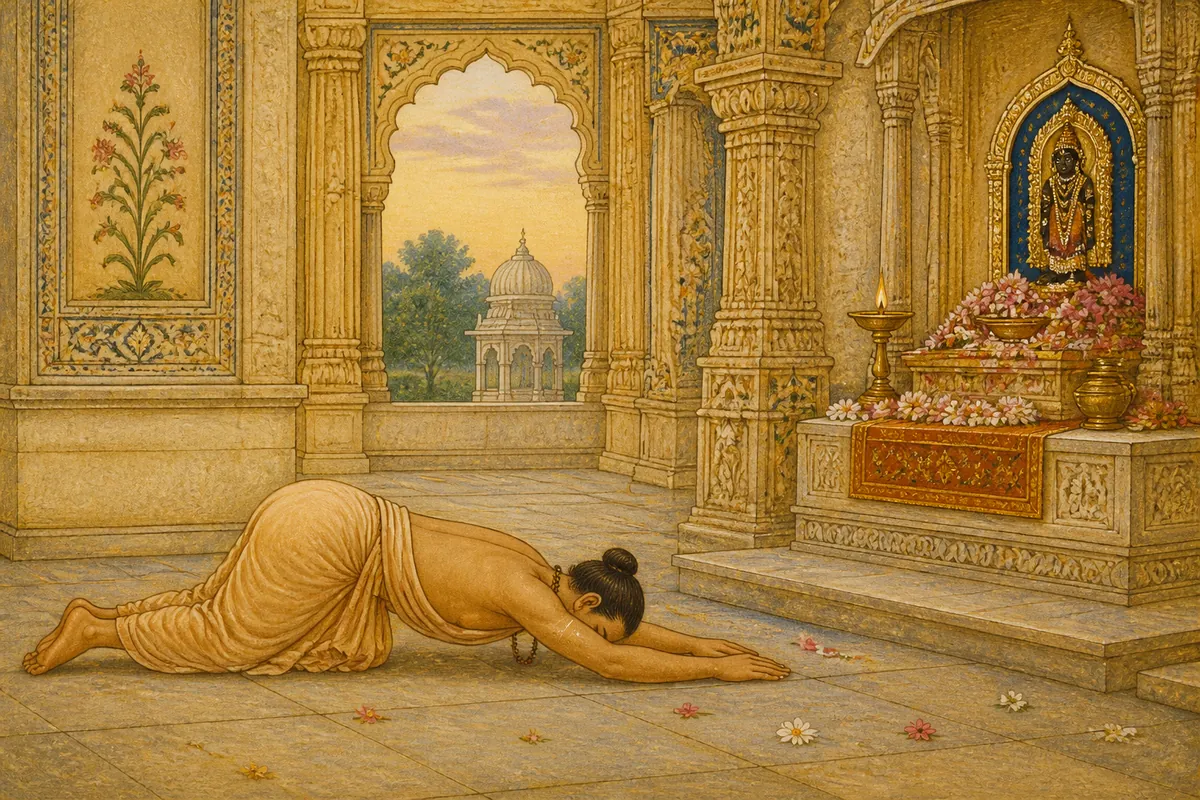
Prostration (pada-namaskara, Sanskrit pāda-namaskāra) — a bow at the feet of the Guru, a saint, or an image of God — is one of the basic sadhanas of the spiritual path in Sanatana Dharma. It is present in daily sadhana, in pilgrimage, in darshan, and in ritual. In the tradition, prostration is among the obligatory preliminary practices (purva-sadhana, Sanskrit pūrva-sādhana), the performance of which lays the foundation for deeper levels of contemplation. The Spiritual Meaning of Prostration The word namaskara is formed from namas (“bow,” “reverence”) and kāra (“action,” “doing”). In the Vedic texts, worship at the feet of

Basic PracticesProstrationsProstrationsPranam
item image

Love meditation: the path to opening the heart

author •date 01.03.2026 •duration 10 min. reading •views 31 просм.

You know how to love. At least, you think you do. But what if the love you call love is merely a shadow of the authentic? Attachment to loved ones, warmth toward those who are pleasant, indulgence toward those who are useful—and a wall of alienation toward everything else. This is not the love of a yogi. This is the love of the ego—conditional, selective, and depletable. Sanatana Dharma knows a different kind of love. Boundless. Patanjali describes it in the thirty-third sutra of the first book of the Yoga Sutras. He lists four qualities of the mind: maitrī, karuṇā, muditā, upekṣā—loving-kindness, compassion, sympathetic j

Meditation 4BSBLove MeditationCompassionEquanimityAnandaDivine Love
item image

Prostrations and bows

author •date 27.02.2026 •duration 6 min. reading •views 23 просм.

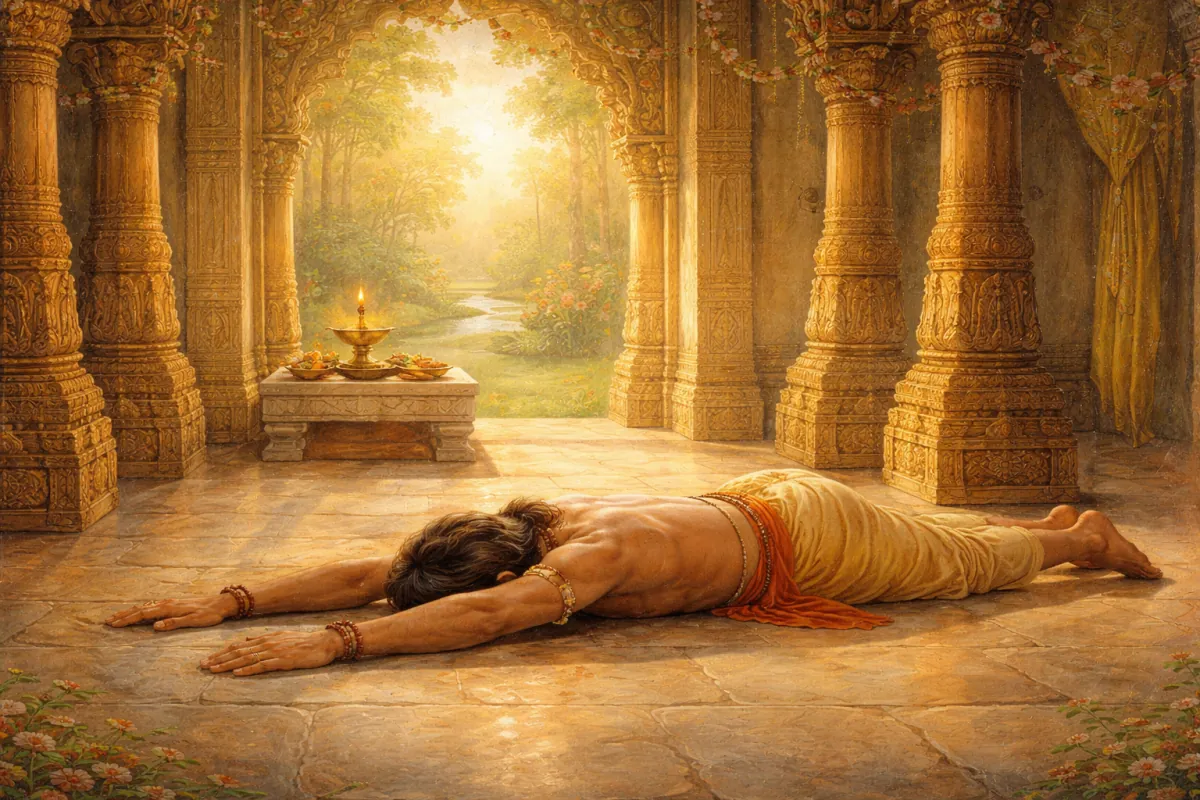
The forehead touches the floor. The arms are stretched forward. The body is extended on the ground — this is exactly how the traditional formula describes a full prostration. In this position, what is commonly called pranama (Skt. praṇāma, from pra — "forward" and namas — "bowing") occurs: the practitioner establishes direct contact with the consciousness of the one before whom they bow. Pranama is part of the system of preliminary practices (purva-seva), which prepare the consciousness for the subtler stages of yoga and contemplation. In the tradition of Sanatana Dharma, it is understood as one of the methods of upasana —

ProstrationsBasic PracticesPracticeSpiritual PracticePranamProstrations
item image

Dharana: the art of concentration and the sixth limb of Patanjali's yoga

author •date 27.02.2026 •duration 11 min. reading •views 17 просм.

How is the boundless will nurtured? Through deep concentration. The Master personally leads the student, teaching him concentration. — The Master's Code 1. Definition and Etymology Dharana (Skt. धारणा) is the sixth limb of the eightfold yoga (Ashtanga Yoga), as expounded by the sage Patanjali in the Yoga Sutras (c. 2nd century BCE – 4th century CE). The term is derived from the Sanskrit root dhṛ (धृ) — "to hold," "to carry," "to support," "to maintain" — and means "holding," "steadfastness," "immovability," or "concentration of the mind." In the context of yogic practice, dharana is defined as directing and holding the min

ConcentrationDhyanaDharanaContemplation
item image

Japa and Mantra

author •date 20.02.2026 •duration 8 min. reading •views 45 просм.

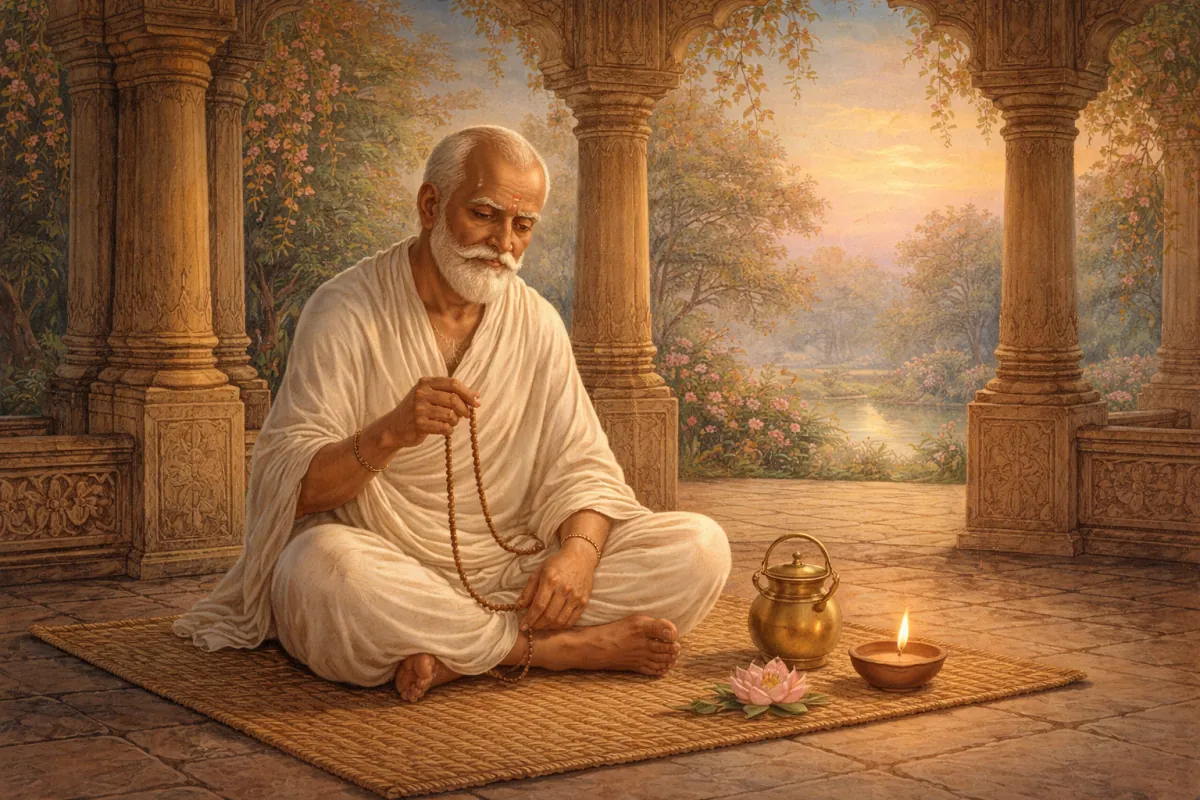
In the tradition of Sanatana Dharma, there is a practice known as the "path for the Kali Yuga"—accessible to all, requiring minimum external conditions, yet leading to the most profound goal: union with God. This is japa (Skt. japa)—the focused repetition of a mantra. What is a Mantra? The word mantra (Skt. mantra) is formed from two roots: man—"mind," "to think"—and tra—"protection," "instrument." Literally: "that which protects the mind" or "an instrument of the mind." There is also a second interpretation: from manana ("to contemplate continuously") and trāyate ("to liberate"). Thus, a mantra is "that which liberates th

MantraSpiritual PracticePracticeBasic PracticesMantra-sadhanaJapaPrayer beads
item image

Sadhana: Traditional system of spiritual practice

author •date 17.02.2026 •duration 7 min. reading •views 26 просм.

The word sadhana is often translated simply as "spiritual practice" — and immediately reduced to a set of morning exercises or a week-long meditation course. In the Sanatana Dharma tradition, this term carries a fundamentally different meaning: it refers to a systemic discipline that encompasses the practitioner's entire life and is directed toward a single goal — liberation from the cycle of samsara. What is Sadhana Sadhana (Skt. sādhanā) comes from the verbal root sādh: "to achieve," "to accomplish," "to bring to completion." In a broad sense, the word denotes any purposeful spiritual effort; in the traditional sense, it

SadhanaPadasNitya-sadhanaDina-sadhanaLoka-sadhana
item image

Asanas

author •date 15.02.2026 •duration 6 min. reading •views 20 просм.

When it comes to asanas, most people imagine gymnastic poses or fitness exercises. However, the tradition of Sanatana Dharma understands this word differently. In Patanjali's "Yoga Sutras" (II.46), asana is defined by two words: sthira-sukham āsanam — "steady and pleasant." It is not the shape of the body, but the quality of being within it. Behind this distinction lies an entire concept. What is an Asana The word āsana (Skt. āsana) traces back to the verbal root ās — "to sit," "to abide," "to be at rest." Literally, it means a "seat" or "body position." In a broad sense, it is any stable position in which the body can rem

AsanasPracticeHatha Yoga PradipikaYoga
item image

Shat Chakra Yoga: practice of working with chakras

author •date 12.02.2026 •duration 7 min. reading •views 19 просм.

Shat-chakra-yoga (Skt. ṣaṭ-cakra-yoga — "yoga of the six circles") is a system of direct work with the energy centers of the subtle body, described in the classical texts of the Natha-Siddha tradition and Hatha Yoga. Its goal is a living sensation of these centers and the ability to manage prana through their mastery. The chakra system has become one of the most recognizable images in modern culture. This is precisely what creates a particular difficulty: a person familiar with the colors and petals of the chakras from books is often convinced that they understand the subject. The traditional view is more demanding. "Pract

Kundalini-yogaHatha Yoga PradipikaShat-chakra-yogaChakra
item image

Contemplative practice of Brahma-vichara

author •date 10.02.2026 •duration 6 min. reading •views 18 просм.

Most people who hear the word "vichara" for the first time imagine a special meditation or an intellectual self-analysis of the nature of consciousness. Others reduce the practice to repeating the question "Who am I?" almost like a mantra. Both understandings lead astray. Brahma-vichara (Skt. brahma-vicāra) is a direct contemplative inquiry into the nature of the Absolute and one's own "Self," which in the tradition of Advaita Vedanta is considered the closest and most direct path to liberation. As stated in the Vivekachudamani—a treatise by Shankaracharya (788–820 AD): "Of all the means of liberation, Jnana alone is the c

BrahmavicharaDivine prideContemplationOne Taste
Articles
Vidya AI
Search
Lectures
World Community of Sanatana Dharma
The world community unites people from many countries who belong to Sanatana Dharma (Hinduism) and practice yoga and meditation under the guidance of the enlightened Master of practical Advaita Swami Vishnudevananda Giri Maharaja.
Join Us
support@sanatanadharma.world