Namaste!

item image

Four Levels of the Body: From Human to Divine

author •date 28.06.2026 •duration 4 min. reading •views 29 просм.

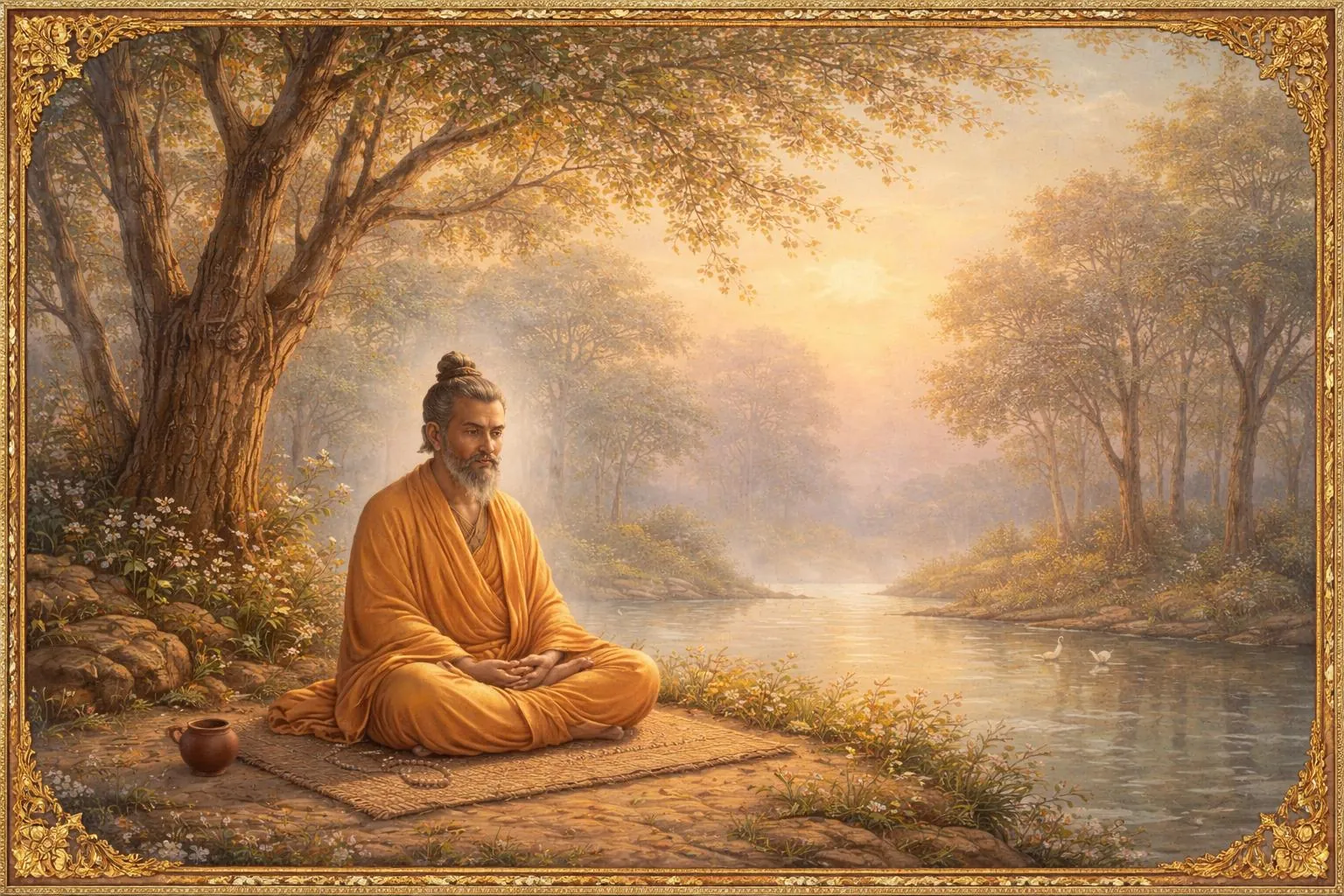
By thus combining the performance of techniques, the cleansing of the chakras, the accumulation of prana, the use of Ayurvedic preparations, the practice of pranayama and asanas, and the accumulation of life force, you can truly feel that your energy can be different, that you have completely transformed your body from an ordinary human, limited body into what is called yoga-deha—a yogic body. There are four levels of bodies. The ordinary human body has many limitations, often falls ill, and does not live very long. Therefore, it is reasonable to transform it into something better. Into what? Into a yogic body (yoga-deha).
item image

Five stages and seven steps of comprehending the path of contemplation

author •date 28.06.2026 •duration 8 min. reading •views 33 просм.

Commentary on the text “On Preserving the Spirit and Training Energy,” Sun Simiao “The five stages of comprehending the Way are as follows: The first stage. There is much agitation and little calm in the heart; consciousness is entangled in thoughts; there is no constancy in relation to things, and thoughts rush forward without restraint, like a wild horse. Such is the heart of ordinary people.” This reminds us of our own state when we begin practice from the state of ordinary people. As living beings, we consist of body, speech, and mind; in other words, body, energy, and spirit (consciousness). In the beginning, these th

item image

Abiding in the natural state through continuous contemplation of the Absolute

author •date 28.06.2026 •duration 4 min. reading •views 37 просм.

Commentary on the text “Chaturashiti-siddha-pravritti.” Champaka The country of Champaka received its name from a flower. The prince who lived there lacked neither means nor pleasures. He was so attached to enjoyments and so captive to his own pride that he gave no thought at all to the consequences. In his garden there was a house built—or rather, skillfully grown—from living champaka flowers. That was where he lived. One day a yogin appeared in the garden. Seeing such an unexpected guest, the prince politely invited him into the house, washed his feet himself, and seated him comfortably. And after dinner, when the yogin

AbsoluteShankaracharyaKarmaViveka ChudamaniContemplationLaya-yogaNondualityNatural StateMahasiddhis
item image

Kleshas: The Path of Self-Liberation in Anuttara Tantra

author •date 28.06.2026 •duration 15 min. reading •views 35 просм.

Commentary on the text “Lamrim” Although our absolute potential is pure and perfect right now, nevertheless the mirror of our mind is still closed to fully realizing it. The process of such closure is called obscuration. When speaking of obscuration, it is usually said that kleshas are responsible for this obscuration. In fact, obscurations and kleshas are one and the same. Kleshas are mental imprints in the stream of consciousness that were created in previous lives (incarnations) and now remain as the consequence of our wrong thoughts, actions, and choices in the past. It is said that two factors are necessary to maintai

ContemplationPure visionKarmaAnuttara-tantraKleshasSelf-liberationSamsaraSamskarasVasanas
item image

Shuka's Great Departure: The Path to Liberation Through Yoga

author •date 27.06.2026 •duration 19 min. reading •views 32 просм.

Commentary on the text “Moksha-dharma,” chapters 333, 334, 335. Narada’s instructions to Shuka Bhishma said: “Having heard Narada’s words, the wise Shuka, very perceptive, reflected, and in his heart found no answer: ‘Sons and wives are a great sorrow; great labor is the attainment of knowledge. What, then, is that eternal abode where sufferings are insignificant, where fortune is great?’ Then, having briefly reflected on his resolute, most blissful path, on the transcendent path, and having understood the final choice of the righteous one, he thought thus: ‘How may I traverse the highest path without sorrow, so as not to

SamadhiSankalpaShukaVyasaMoksha-dharmaSuryaBrahmanNon-ActionYogaNarada
item image

The Divine Life and Teachings of Narasimha Saraswati

author •date 27.06.2026 •duration 16 min. reading •views 45 просм.

Commentary on the text “Sri Guru Charitra” The text “Sri Guru Charitra” contains stories about the incarnations of the avadhuta Dattatreya. The Birth of Narasimha Saraswati The eleventh story, “The Birth of Narasimha Saraswati,” tells how Ambika, having received the blessing of the guru Shripada, became pregnant, since she had good thoughts and was married to a practitioner, a devotee of Shiva. When she gave birth to the child, everyone was amazed. Astrologers predicted that the child would be a world teacher, would possess the eight siddhis and nine kinds of knowledge. They also said that she had given birth to an incarna

Shri Guru CharitraSannyasaNarasimha SaraswatiSiddhiDattatreyaKarmaLiberationPure visionDharmaGuru
item image

The Qualities of a Yogi and Integration with the Absolute in the Tirumantiram

author •date 27.06.2026 •duration 20 min. reading •views 37 просм.

Commentary on the text “Tirumantiram,” “The Song of the Rishi Tirumular,” Tantra One. “Tirumantiram” is a very extensive text devoted mainly to kundalini yoga, samadhi, and siddhis. According to the teaching, we must approach the practice of the teaching already prepared, possessing a certain foundation of qualities. Usually, such qualities are spoken of as discriminating wisdom (viveka), detachment (vairagya), the sixfold qualities of sattva (shatsampat), and an ardent aspiration for liberation from the cycle of birth and death (mumuksha). The sixfold qualities of sattva are shama, dama, uparati, titiksha, shraddha, samad

Natural StateLaya-yogaContemplationNandiGuru-yogaTirumularSelf-liberationVira-yoginTirumantiram
item image

The Path to Enlightenment: Lessons from the Story of Sikhidhvaja and Chudala

author •date 27.06.2026 •duration 18 min. reading •views 41 просм.

Commentary on the text “Yoga Vasistha,” Chapter Six. The Story of Sikhidhvaja and Chudala The Importance of Studying Sacred Texts Why is it important to study texts, to study mythology? Because if you study the texts of the transmission lineage correctly, it is like guru yoga; it is like uniting the mind with the saints. Uniting the mind with the saints means that, through the text, we synchronize and attune our consciousness, and in this way receive one of the forms of spiritual transmission, namely shastra-kripa, that is, the blessing of the sacred text. If you know how to work with a sacred text correctly, you will cert

item image

The Power of the “Guru Charitra” and Support on the Spiritual Path

author •date 27.06.2026 •duration 5 min. reading •views 32 просм.

Commentary on the text “Sri Guru Charitra” The conclusion of the text “Sri Guru Charitra,” Chapter 52 (the last). The first chapter began when Siddhamuni gave darshan to Namadharak. The last chapter concludes with Namadharak’s attainment of samadhi. It describes how to use the text “Guru Charitra,” and is called “Guru Charitra — the Method of Worship.” Namadharak’s Attainment of Samadhi Namadharak attained supreme bliss while listening to “Sri Guru Charitra,” like nectar, from Siddhamuni. He drank the nectar of “Guru Charitra,” and tears of joy flowed from his eyes. His body became extraordinarily calm, and his hair stood

Shri Guru CharitraKali-yugaDharmaKarmaSamadhiSamskarasPresenceMukti
item image

Proper Meditation: Overcoming Blurriness and Excitement

author •date 27.06.2026 •duration 14 min. reading •views 35 просм.

We usually talk a great deal about the path of non-effort beyond meditation (the yoga of non-meditation). This is the pinnacle of the spiritual path. Although it is explained to the disciple from the very beginning, it is not something we master at once, instantly. It is something we come to after we have learned lower methods of meditation and concentration. Traditionally, the very highest is explained first, on the assumption that the disciple possesses the highest capacities. Then, when it becomes clear that he does not possess such capacities, a lower teaching is explained. It is believed that one who possesses the hig

Articles
Vidya AI
Search
Lectures
World Community of Sanatana Dharma
The world community unites people from many countries who belong to Sanatana Dharma (Hinduism) and practice yoga and meditation under the guidance of the enlightened Master of practical Advaita Swami Vishnudevananda Giri Maharaja.
Join Us
support@sanatanadharma.world