Namaste!

item image

Worship of the Formless God and the Importance of the Inner Path

author Гуру •date 11.08.2026 •duration 25 min. reading •views 27 просм.

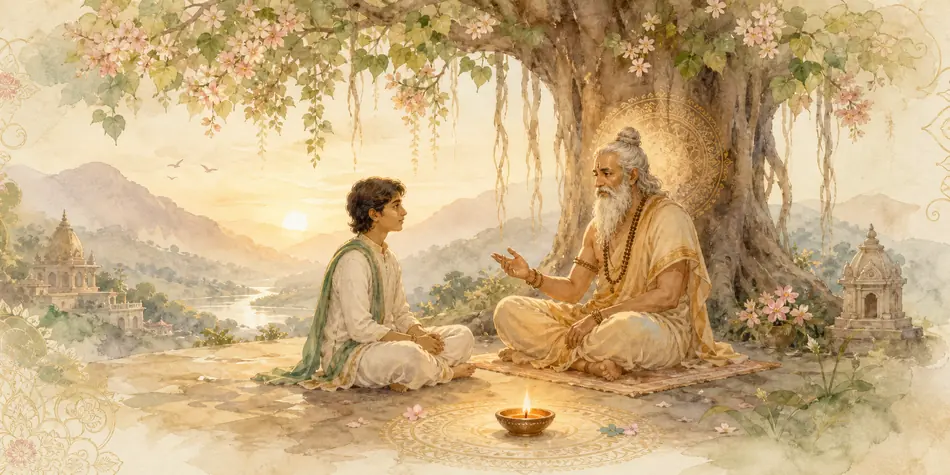
Commentary on the text “Yoga Vasistha.” Chapter 6. Description of God One day, Vasistha met Shiva on Mount Kailasa. He saw a Great Light and realized that this Light was Shiva, who was walking hand in hand with Parvati, while Nandi the bull walked ahead of them, clearing the way. Vasistha told his disciples of the deity’s presence, and they went to meet him. Vasistha greeted Shiva, bowed to him with reverence, and then asked him a question: “What is the method of worshiping God that destroys all sins and leads to bliss?” Shiva gave him the following instruction: “A quality of a yoga disciple is faith (shraddha or Ishvara-p
Laya-yogaYoga VasisthaShraddhaShivaAhamkaraGodFaithDattatreyaPure visionContemplation
item image

Principles and Ideals of Spiritual Discipleship in Yoga

author Гуру •date 09.08.2026 •duration 52 min. reading •views 27 просм.

We will discuss the principles and ideals of spiritual discipleship, since these principles are of great importance to us and are, in fact, the cornerstone. As you know, from the moment the words of Refuge and commitment are spoken, the disciple trains in upholding and following the yogic principles and instructions until enlightenment is attained. What distinguishes discipleship from non-discipleship? If you are not a disciple of any master and do not belong to any school or spiritual system, you practice according to your own ideas. But when you decide to enter a spiritual school and establish a connection with a teacher

Qualities of a DiscipleRetreatServiceBehaviorGuru-yogaAnugraha-shaktiEnergySpiritual PracticeLiberationFourteen Root VowsShat-sampatSadhana, Seva, Svadhyaya, SamadhiShuddha-vidyaFive Powers of ShivaFateEthicsQualities of a YoginYama and niyama
item image

The Qualities of a Disciple and the Story of Encountering the Nondual Teaching

author Гуру •date 09.08.2026 •duration 25 min. reading •views 26 просм.

Today we will talk about our attitude toward the teachings. In our monastery, there are six main transmission lineages: the lineage of Dattatreya, the lineage of Anama Prabhu, the Shuddha Dharma lineage, the lineage of Shankara, the lineage of Matsyendranath and Gorakshanath, the lineage of Saraha, and the lineage of Uddiyana. Some of them are close and direct, while others are remote. Because of our limited merit, we do not have a large library with an extensive collection of texts. Nevertheless, because of your great merit, you have a connection with the teachings and a Guru who conveys the quintessence of all spiritual

Guru-yogaNondualityDharma
item image

Proper Motivation and Seven Instructions for Taming the Mind

author Гуру •date 09.08.2026 •duration 51 min. reading •views 30 просм.

To begin with, I would like to say that in spiritual practice, our motivation and the state of mind in which we receive the teachings are very important. If we have developed the right motivation, our practice will also be successful. But if our motivation is wrong, we will not fully understand what we want from the teachings or where we should go next. The right motivation matters greatly. If you have the right motivation, you are on the right path and will therefore succeed in time. If your motivation is wrong, you may still gain something, but its benefit will be questionable. How can we cultivate the right motivation?

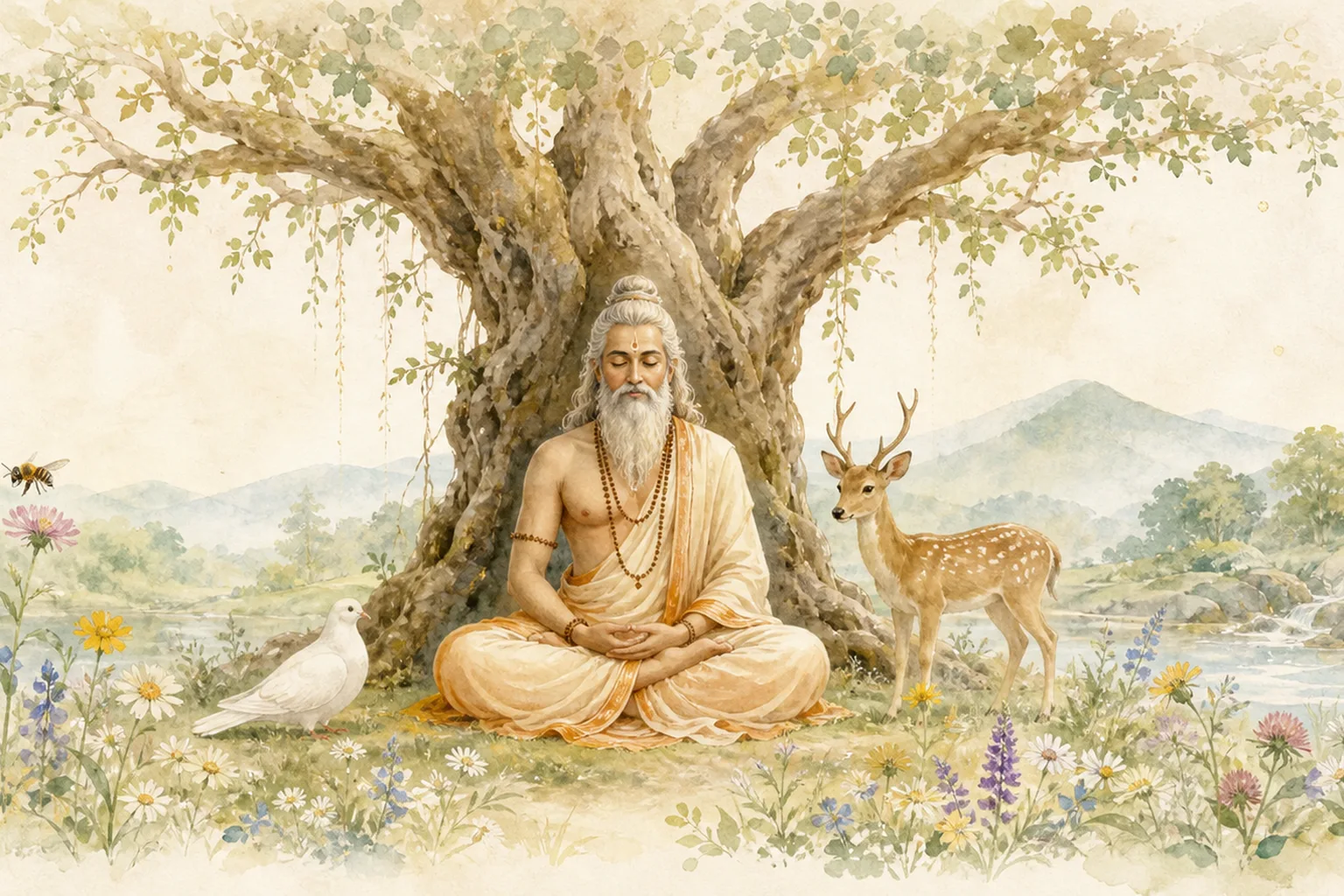
“Dove” stagePure visionMindfulnessEgoLaw of KarmaPacification of the mindBee behaviorRight motivationDeer behavior
item image

The Learning System as a Path to Spiritual Realization

author Гуру •date 08.08.2026 •duration 8 min. reading •views 35 просм.

As you know, throughout January the monks will be taking the remaining exams. We are entering the next academic year. I think that in 2007 the learning process will become more profound. I hope that you will make considerable efforts in striving to achieve excellent results. Once, I was talking with a monk, and he expressed the following thought: “I do not practice for the sake of rankings or grades.” Of course. Rankings and grades merely reflect the inner processes of spiritual growth that are taking place; they are a kind of mirror. It is very important for us to assess ourselves from the standpoint of the Dharma, to und

TrainingSelf-developmentRealizationSpiritual PracticeLiberationDharmaGuruLaya-yogaMonastery
item image

Sahaja Vidya: Perceiving the World as Shiva's Divine Play

author Гуру •date 08.08.2026 •duration 24 min. reading •views 32 просм.

The Vedic Family as the Foundation of Spiritual Culture A Vedic family is a mini-sangha, and the home of a Vedic family is an ashram. The more people practice, the purer the world will become, the more peaceful life in it will be, and the easier it will be to free oneself from the illusion of samsara. The more ashrams and temples there are, the more spiritual energy and sattva there will be, the more teachers, masters, sannyasis, karma sannyasis, and sadhus there will be, and the stronger the culture will become. The power of culture is a great thing, because a person is shaped by their environment, society, and the magic

LilaSahaja-vidyaSpanda-karikaJivanmuktiObserverSpandaViewShivaDharmaContemplation
item image

Developing Contemplation: From the Periphery to Deep Awareness

author Гуру •date 02.08.2026 •duration 25 min. reading •views 23 просм.

When we speak of developing contemplation, it is assumed that we already possess something, that something has already arisen within us. For if it had not arisen, there would be nothing to develop. So what is it that must arise within us? A different principle of awareness must be born within us. It can be called “deep awareness.” The essential question is whether our mind remains on the periphery or abides in deep awareness. The entire teaching of the siddhas is about shifting awareness from the periphery into deeper layers. Levels of Peripheral Consciousness What is this periphery? The outermost periphery is, of course,

SamadhiBuddhiContemplationManasDharanaShambhavi-mudraPresenceDhyanaConcentrationSelf-liberation
item image

The Liberation of the Householder: A Dialogue Between King Janaka and Yogini Sulabha

author Гуру •date 02.08.2026 •duration 21 min. reading •views 31 просм.

Commentary on the text “Moksha Dharma,” Chapter 322. This chapter begins with a conversation between Yudhishthira and Bhishma. Yudhishthira asks how one can attain liberation without abandoning the state of a householder, and what the supreme Self is. In response, Bhishma tells him about a conversation between King Janaka and the holy yogini Sulabha. Laypeople and Brahmins praised King Janaka’s virtues, for he had attained liberation and, having subdued his senses, continued to rule his kingdom. At that time, Sulabha, a mendicant sannyasini who observed her vows, was wandering about and heard of his outstanding qualities.

DetachmentMoksha-dharmaSankhyaSannyasinMokshaAtmanLiberationJanaka
item image

Spiritual Evolution: From Human to Divine Consciousness

author Гуру •date 01.08.2026 •duration 36 min. reading •views 28 просм.

Spiritual Evolution (People, Sadhus, Jnanis, Siddhas, Gods) The meaning of life lies in understanding the divine will and carrying out the divine will, not in serving one’s ego, one’s family, country, or nation. All of that is good and should be done at one’s own level, but it cannot be made the meaning of life. The meaning of life is to understand God, to understand the divine will, and to carry out the divine will. The meaning of life is to allow the divine to manifest through this body, through various actions. In the Vedic tradition, in the tradition of Sanatana Dharma, these are called jnana-shakti (divine wisdom), ic

SadhuBrahmanMystical experienceViveka ChudamaniShankaraGuruKarmaJnaniSiddhi
item image

The Yoga of Contemplation and the Path to the Natural State of Mind

author Гуру •date 01.08.2026 •duration 27 min. reading •views 21 просм.

Commentary on the text “Laya Amrita Upadesha Chintamani” We continue discussing the section of the teachings related to the yoga of contemplation. To study Laya Yoga in our tradition means to study five sections, or five yantras of Laya Yoga: the section on contemplation and the section on energy, which form the foundation of the teachings, as well as the sections on dream yoga, sound yoga, and light yoga, which belong to higher levels. It can be said that the yoga of contemplation and the yoga of controlling inner energy are the foundation, while the three higher yogas are the roof and interior finishing of the edifice of

Nature of UmaSamskarasEmptinessLaya-yogaContemplationNatural StateDualityAnugrahaSelf-liberation
Articles
Vidya AI
Search
Lectures
World Community of Sanatana Dharma
The world community unites people from many countries who belong to Sanatana Dharma (Hinduism) and practice yoga and meditation under the guidance of the enlightened Master of practical Advaita Swami Vishnudevananda Giri Maharaja.
Join Us
support@sanatanadharma.world