Namaste!

item image

The Immortal Life and Miracles of Siddha Swami Brahmananda

author •date 17.07.2026 •duration 27 min. reading •views 38 просм.

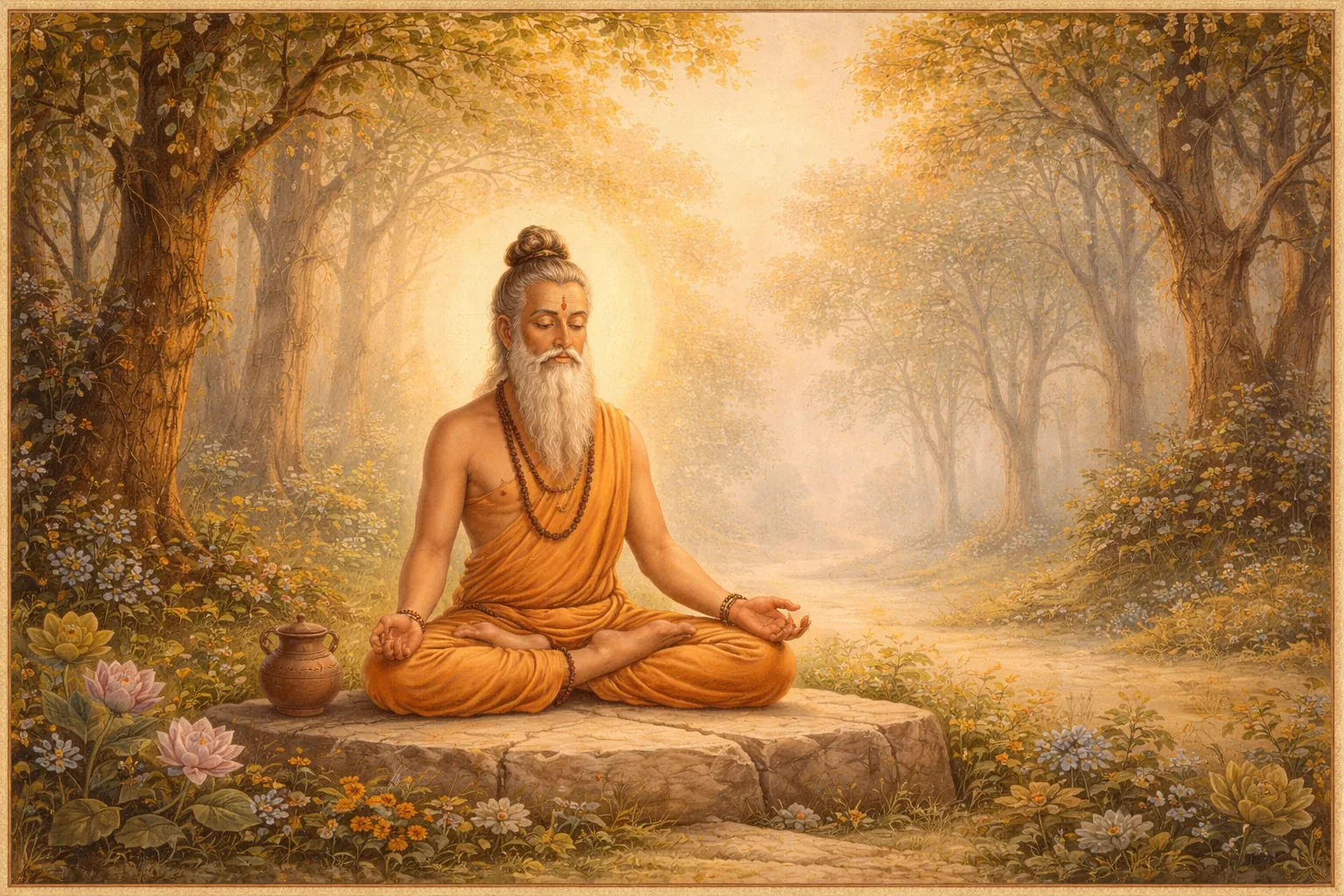
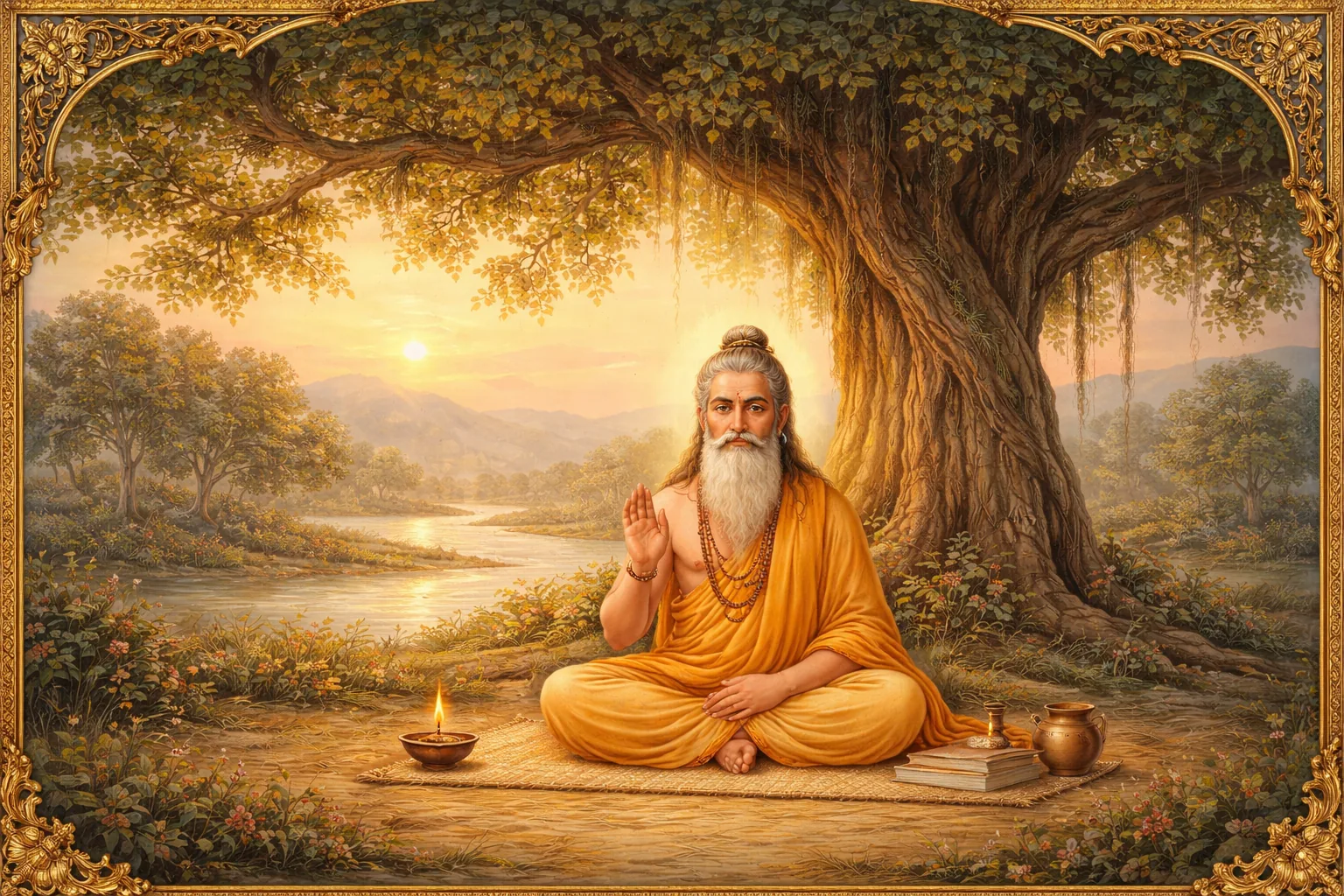
Hagiography of Swami Brahmananda The Life of Achintya Baba His fuller name is Brahmananda Sri Shiva Prabhakara Siddha-Yogi Paramahamsa. It is mentioned that Swami Brahmananda was born on March 31, 1263, and realized the rainbow body on April 6, 1986. Brahmananda was a disciple of a master in the Siddha tradition, Sri Paambati. Swami Paambati is very well known in Kerala, where there are many devotees and witnesses to his miracles. Swami Brahmananda lived without aging for many epochs in many places in India, both in the north and in the south, under different names. He was a master of the secret technique of parakaya-prave
Laya-yogaSamadhiImmortalityAvadhutaParakaya-praveshenaBrahmanandaPaambatiAshtama-siddhiSiddha
item image

The Trials of Dattatreya: Pure Vision Beyond Duality

author •date 16.07.2026 •duration 18 min. reading •views 32 просм.

Commentary on the text “Inexhaustible Stories about Dattatreya” “Near Sahyadri there is a place called Matapura, where there lived a Brahmin named Vishnudatta. He was very learned in the study of the Vedas and steadfast in their application. His wife Sushila was exceedingly devoted and beneficent. I have no way to describe the steadfastness, asceticism, and absence of desire characteristic of this noble couple. They worried about nothing and lived in their own world, simply following their religious customs. If the villagers gave them a little grain, treating Vishnudatta as a good Brahmin, it was great wealth for them. Gra

item image
author •date 16.07.2026 •duration 17 min. reading •views 31 просм.

Commentary on the text “Sanatsujata Parva” “Sanatsujata” begins with Dhritarashtra wishing to receive the darshan of the great deity Sanatsujata, meeting him, and conversing with him. Of course, Sanatsujata did not manifest on the gross physical level, but on the level of pure vision, that is, on the level of the dimension of energy as pranava-deha, meaning a body consisting of subtle vibration. Since Dhritarashtra possessed awakened and devoted consciousness, he was able to come into contact with Sanatsujata. Principles of Spiritual Communication In order to come into contact with someone and build a relationship, one sho

item image

Inner emptiness as the path to attaining the eight great siddhis

author •date 16.07.2026 •duration 12 min. reading •views 34 просм.

Commentaries on the text by Rishi Tirumular, “Tirumantiram,” Tantra 3, Chapter 11, “The Eight Great Siddhis.” “Realization of the eight siddhis. One who prays in humility and seeks God without being distracted by anything can attain the eight siddhis.” Here the first condition for attaining such realization is indicated: “Prays, seeks God in humility, without being distracted by anything.” “Prays” means that there is continuous aspiration. Whether you recite a prayer or not is not so important. In Laya Yoga, prayer is not the main practice. Our main practices are visualization, contemplation, and meditation. Nevertheless,

item image

Nine obstacles on the path of yoga and methods for overcoming them

author •date 16.07.2026 •duration 31 min. reading •views 38 просм.

Commentaries on the text “The Yoga Sutras of Patanjali” In the “Yoga Sutras,” Shri Patanjali describes various kinds of obstacles that arise in the process of yoga: illness apathy doubts inattention laziness distraction false vision lack of attainment at the stages of yoga instability at these stages This is what distracts consciousness. These are obstacles. Here the term “antaraya” is used, which is translated as “interval” or “break in natural awareness.” Obstacles (antaraya) are those times when God, as it were, leaves the yogin, when his higher circuits of consciousness are switched off due to external causes: inattent

item image

The Power of Consciousness: From Siddhi to Divine Transformation

author •date 15.07.2026 •duration 12 min. reading •views 31 просм.

Commentary on the text “Tirumantiram,” Tantra 3, Shloka 668 List of siddhis: 1. The ability to become tiny, like an atom — anima. 2. The ability to become immovable and great in size, expanding infinitely — mahima. 3. The ability to become heavy, like a mountain — garima. 4. The ability to become weightless and light, like steam — laghima. 5. The ability to leave the body and enter other bodies — parakaya-pravesha. 6. Complete knowledge of the past, present, and future; the ability to penetrate anywhere, even to other planets and stars — prapti. 7. The ability to be present in all things while controlling events; the abili

item image
author •date 15.07.2026 •duration 14 min. reading •views 37 просм.

Commentary on the text “Yoga Vasistha,” Chapter 6 “The world is not material; emptiness cannot be seen. The mind becomes nothing. What remains is truth, indescribable yet existing. The intellect becomes completely confused by contradictory statements, but when truth is investigated by the proper methods, it is realized. One whose intellect is awakened is called a knower of truth. He has become established in the state of nondual consciousness and does not perceive the world as the world.” An awakened intellect, an awakened mind, means that as a result of practice there is viveka-vidya, discriminating wisdom has been attain

item image

The Acquisition of the Yoga Empire

author •date 15.07.2026 •duration 16 min. reading •views 0 просм.

Commentary on the text “Datta Darshanam” The Lord said with an encouraging smile: “Kartavirya, in order to experience bliss, one must curb this unruly mind. Is not the mind the cause of bondage and freedom? But it is not easy to control it. The elders say that the mind is as uncontrollable as the wind. In fact, it is easier to control the wind than the mind. That is why followers of yoga achieve control of the mind through control of the breath. The mind and the breath are like a pair of horses. If one becomes unruly and behaves as it pleases, then by pulling the reins of the second, the first can also be restrained. Conse

item image

The Acquisition of the Yoga Empire

author •date 15.07.2026 •duration 16 min. reading •views 35 просм.

Commentary on the text “Datta Darshanam” The Lord said with an encouraging smile: “Kartavirya, in order to experience bliss, one must curb this unruly mind. Is not the mind the cause of bondage and freedom? But it is not easy to control it. The elders say that the mind is as uncontrollable as the wind. In fact, it is easier to control the wind than the mind. That is why followers of yoga achieve control of the mind through control of the breath. The mind and the breath are like a pair of horses. If one becomes unruly and behaves as it pleases, then by pulling the reins of the second, the first can also be restrained. Conse

item image

Zen Parables: The Path to Direct Realization Without Mental Constructs

author •date 15.07.2026 •duration 9 min. reading •views 31 просм.

Commentary on the text “Zen Parables” One day a monk came to Yushu and asked: “How should I live alone on the top of a mountain?” Yushu answered: “Why do you leave your Zen in the valley and climb the mountain yourself?” From the point of view of the teaching, these stories are for us a kind of symbolic and non-sign transmission. The monk asked: “How should I live in solitude on the mountain?” The teacher answered him: “Why do you leave your realization in the valley and climb the mountain?” What did the teacher want to say? He wanted to tell him the following: “What is here is everywhere; what is not here is nowhere. You

Articles
Vidya AI
Search
Lectures
World Community of Sanatana Dharma
The world community unites people from many countries who belong to Sanatana Dharma (Hinduism) and practice yoga and meditation under the guidance of the enlightened Master of practical Advaita Swami Vishnudevananda Giri Maharaja.
Join Us
support@sanatanadharma.world