Namaste!

item image

Prakriyas of Vedanta: Introduction to the 24 Tattvas

author •date 11.06.2026 •duration 14 min. reading •views 35 просм.

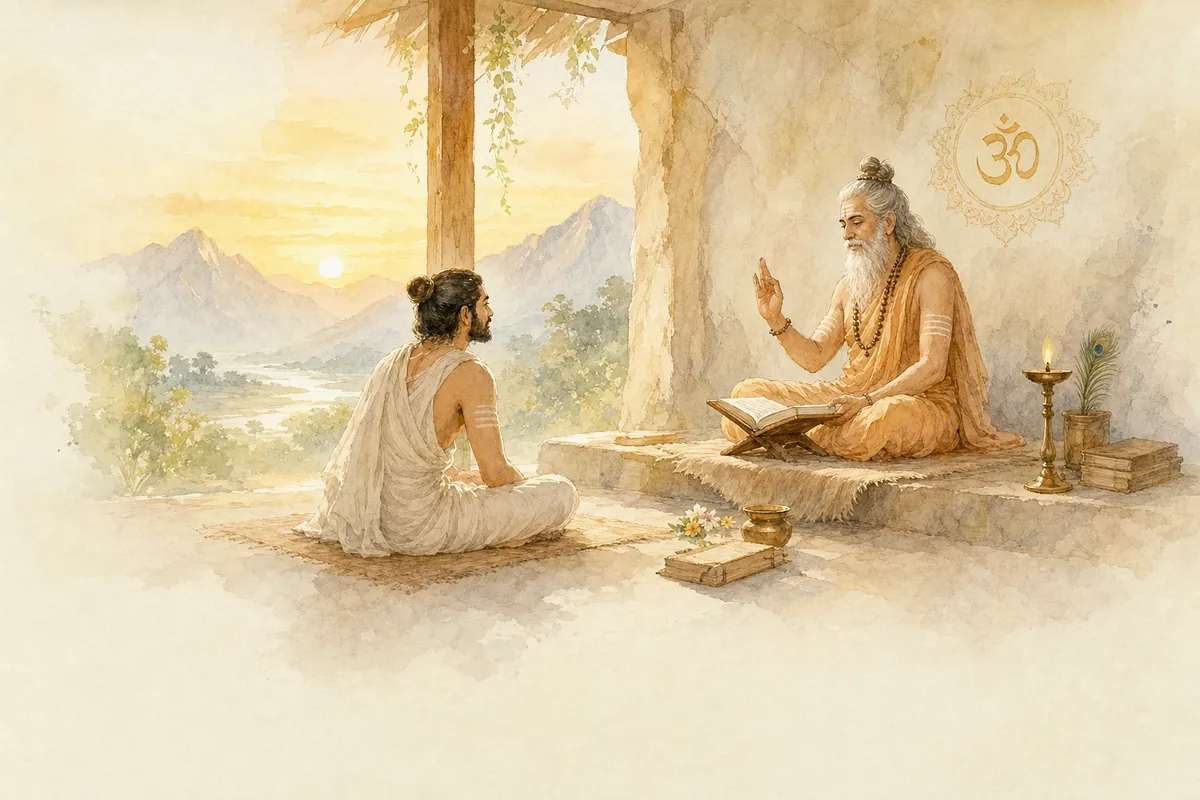
Prakriyas – the Basic Concepts of Vedanta Prakriyas are the basic categories of Vedanta, regardless of what particular type of Vedanta a person adheres to: siddha-advaita, pratyaksha-advaita, vishishta-dvaita, or any other variety of it. These are fundamental concepts that underlie Vedanta—of course, Advaita and the Advaita of the Siddhas—and are intertwined with Tantric currents. Often, when we explain the teaching to others or engage in philosophical debates, we need to have a semantic conceptual foundation, certain common fundamental bases, because if there are no common fundamental bases, it is difficult to explain any
item image

Milarepa: Attachment, Renunciation, and the Transmission of Secret Teachings

author •date 08.06.2026 •duration 11 min. reading •views 36 просм.

Commentary on the text “The Great Yogi of Tibet Milarepa” Then Rechung asked: “Teacher, what made you leave Marpa? Lama Marpa asked you to stay with him for several years, but how long did you remain with him?” The Teacher replied: “I did not stay there for very many years, and the following circumstances prompted me to return to my native village. Usually in solitude I remained awake, but one day toward morning I dozed off, and I dreamed that I had returned to my village. My house, Four Columns and Eight Pillars, looked like the ears of an old donkey. Rain was leaking through the roof and had flooded the collection of sac

item image

True and False Motivation on the Spiritual Path: The Story of Nanda

author •date 08.06.2026 •duration 5 min. reading •views 36 просм.

Commentary on the text “The Story of Nanda’s Conversion” In Shravasti, the venerable Nanda was saying aloud to many monks: “I am not satisfied, dear friends, with the brahmin life. I cannot endure the brahmin life. I shall abandon discipleship and return to what is inferior.” A certain monk told the Blessed One about this. The Blessed One ordered Nanda to be summoned to him and asked him whether this was true. “Yes, venerable sir.” “But why?” “When I was leaving home, venerable sir, my beloved from the Shakya clan, before she had even finished painting the parting in her hair, looked at me and said: ‘Come back soon, my lor

author •date 08.06.2026 •duration 36 min. reading •views 35 просм.

The Practice of Prarthana Mudra and Entering Contemplative Presence We begin with the practice of prarthana mudra, or, as it is also called, namaste kriya, when we fold our palms at the heart, closing the lunar and solar channels, and enter contemplative presence. It is very important to understand exactly how to enter contemplative presence during the practice of prarthana mudra. If you do it simply as a gesture of greeting, it has no meaning. The essence is precisely to enter presence. To do this, you look straight ahead into space, relax, but at the same time your spirit is vigilant, like a tiger ready to leap. You let

item image

Spiritual effort, tapas as a path to the Divine Light

author •date 08.06.2026 •duration 33 min. reading •views 33 просм.

Commentary on the text “Ramalinga Swamigal. Shiva Jyoti” Topics: Divine Reality (transmission of God’s bhava) · Self-liberation, self-transcendence, self-recognition · Effort (tapas, purusha-kara) Tapasya as the Foundation of the Monastic Path To be a sadhu means to perform tapasya. For a monk, tapasya consists in adhering to monasticism; for a novice, to the novitiate. This is their duty. It is precisely this that frees a monk and a novice from various debts: debt to the family, debt to society, and other kinds of debts. This permits them to live on the donations of laypeople. Otherwise, it becomes their karma. A monk’s t

item image

Qualities of a Practitioner: The Path of the Mahasiddhas Through Everyday Life

author •date 08.06.2026 •duration 11 min. reading •views 28 просм.

Commentary on the text “Chaturashiti-siddha-pravritti” In Dhanarupa there lived a seller of firewood—Achinta, which means “one who has left thoughts behind.” He was poor. Day and night he thought about how to become rich. Nothing except fortune and money interested him. But all this was only dreams, and, not knowing what to do next, he went to a quiet place to reflect. The yogin Kambala, passing by, asked him: “You are sitting silently alone in this wilderness. What are you thinking about?” “I am in despair, yogin; my heart longs for fortune and money. I cannot think of anything else.” “If I teach you how to find all this,

item image
author •date 07.06.2026 •duration 52 min. reading •views 34 просм.

Usually we begin our classes with the mantra Om. And before we perform it, I will try to explain what kind of practice it is. Previously I did not give such explanations, but then I came to the conclusion that even the simplest practices need to be explained. When we come into contact with the teaching, we often may not understand its depth or may consider certain aspects to belong to a particular cultural tradition. But when studying the teaching, it is very important to understand that engaging in spiritual practice is connected not with belonging to any cultural tradition, but with belonging to a spiritual tradition. At

16 stages of contemplationAdvaitaKarmic VisionLaya-yogaContemplationBrahmanMantra OMShankaracharyaGuru-yoga
item image

Self-Surrender to the Absolute: The Path to the Natural State

author •date 07.06.2026 •duration 21 min. reading •views 30 просм.

Commentary on the text by Sri Ramana Maharshi “Collected Works,” chapter six: “Knowledge of the Supreme Atman.” This chapter describes the way to realize the Atman. When the mind in the form of the ego, which takes the body to be the Atman and wanders outward, is held within the Heart, the feeling “I am in the body,” “I,” departs, and the inquiry “who abides in the body?”, conducted with a calm mind, will be experienced as “I am the Supreme Self.” This “I – Self” is nothing other than the Absolute, the Atman, situated in the lotus of the Heart, the city of the body, the abode of God. After this, one should remain calm, wit

EmptinessSelf-surrenderAtmanEgoAbsoluteSahaja-samadhiRamana MaharshiLaya-yogaClear light
item image

The View of Nonduality: The Path of Self-Transcendence in Laya Yoga

author •date 07.06.2026 •duration 22 min. reading •views 36 просм.

View Were there no view, all teachings would be merely aids, superficial instructions on behavior. The absolute view consists in relaxing in the nondual. The view is nonduality. In Laya Yoga, the view is the basis, the path, and the fruit. In Christian terms, one could say that this is our God. Nonduality, niralambha, the state without support, is the object of devotion, the ultimate goal of attainment and the method of practice, the supreme foundation of Being, the universal Spirit permeating all that exists, upon which we meditate. All teachings lead to the realization of nonduality; however, why do we say that Laya Yoga

NirvanaNondualityLaya-yogaNatural StateNon-ActionSamsaraAbsoluteSelf-TranscendenceGuru-yogaView
item image

The path to the natural state through the practice of contemplation

author •date 07.06.2026 •duration 16 min. reading •views 34 просм.

Commentary on the text “Chaturashiti-siddha-pravritti.” Tantipa “In the city of Sandhonagara there lived a weaver who had many children. Through his skill he had amassed great wealth and married his sons to girls from good families. He continued to live together with them, and the whole family prospered. The weaver’s wife died when he was eighty-nine years old; he had already grown old, become weak and decrepit. His daughters-in-law received their father, but everyone who saw him laughed and mimicked his elderly manners and quirks. Feeling that the old man’s presence at the table had begun to drive people away from the hou

Articles
Vidya AI
Search
Lectures
World Community of Sanatana Dharma
The world community unites people from many countries who belong to Sanatana Dharma (Hinduism) and practice yoga and meditation under the guidance of the enlightened Master of practical Advaita Swami Vishnudevananda Giri Maharaja.
Join Us
support@sanatanadharma.world