Namaste!

item image

Renunciation of samsara and realization of unity with Shiva

author Гуру •date 03.10.2026 •duration 27 min. reading •views 47 просм.

We have been caught in the web of impermanence. Something must be done about this. We must be resolute and goal-oriented; we must not be distracted or inattentive, or think as though we have no time. There is no time to waste here; we must act decisively, like a beautiful woman whose hair has caught fire. She does not stop to adorn herself; she immediately puts out the flames. What does it mean to be resolute? To enter contemplation right now, decisively. To direct your mind toward God right now, thinking that there will never be better conditions at all. Perhaps there will be, perhaps not—no one knows. It must be done rig
LiberationKarmaSamsaraBrahmanShivaShri Siddhanta ShikhamaniDikshaAdvaitaGuru
item image

The Practice of Nonduality: The Path of Anuttara Tantra

author Гуру •date 02.10.2026 •duration 14 min. reading •views 42 просм.

When you perform sadhana with the Om mantra, you listen attentively to the sound vibration. This sound vibration is threefold. The initial syllable “A” indicates creation, the syllable “U” — maintenance, and “M” — dissolution, destruction. And the silence and absence of thought after “M” indicate the unmanifest. These three syllables signify the three states of consciousness — waking, subconsciousness, and superconsciousness. And the absence of thought after “M” points to turiya. When we recite the Om mantra in the style of laya-yoga, anuttara tantra, we learn not to separate these three sounds, listening attentively to th

ContemplationNiralambhaNondualityMantra OMBrahmanShaktiAnuttara-tantraLiberationDivine prideNatural State
item image

Three Stages of Knowing the Atman: Shravana, Manana, Nididhyasana

author Гуру •date 02.10.2026 •duration 16 min. reading •views 42 просм.

Commentary on the “Brihadaranyaka Upanishad” “Janaka, king of Videha, performed a sacrifice with many gifts for the priests. Brahmins from among the inhabitants of Kuru and Panchala gathered there. And Janaka, king of Videha, wished to know which of these Brahmins was the most learned. He confined a thousand cows in an enclosure and attached ten measures of gold to the horns of each one. He said to them: ‘Venerable Brahmins, let the wisest Brahmin among you lead these cows away.’ Those Brahmins did not dare to do so. Then Yajnavalkya said to his disciple: ‘Dear Samashravas, lead them away.’ He led the cows away. The Brahmi

BrahmanMananaShravanaAtmanEnlightenmentContemplationEmptinessBrihadaranyaka UpanishadYajnavalkyaNididhyasana
item image

The Path of Practice: Vigilance, Traps, and a Story from the Mahabharata

author Гуру •date 30.09.2026 •duration 22 min. reading •views 38 просм.

When you come to and practice at a monastery, you should have a certain vision of your prospects (in a relative sense, of course). The prospect for a novice is monasticism; the prospect for an inexperienced monk is to become an experienced monk; the prospect for an experienced monk is to become a master of contemplation and practice; the prospect for a master of contemplation and practice is to truly free their mind from illusions and attain one of the levels of enlightenment. The prospect for one who has attained enlightenment is to become in the next life an immortal deity possessing a rainbow body, or to become an immor

ContemplationKarmic VisionGangaMahabharataSpiritual PracticeVigilanceSamaya
item image

Cosmology and Liberation in the Subala Upanishad

author Гуру •date 30.09.2026 •duration 12 min. reading •views 32 просм.

Commentary on the text “Subala Upanishad” The “Subala Upanishad” is a dialogue between the sage Subala (the author of this Upanishad) and the creator god Brahma, during which Brahma revealed the mystery of the creation of the universe and jnana yoga. The “Subala Upanishad” is highly important for understanding certain practices of anava yoga described in it, as well as certain practices of shakti yantra. The Emergence of the Primary Elements “What was there then?” To Subala, that Brahma said: “There was neither being nor non-being then, nor was there both being and non-being simultaneously. From this darkness appeared, fro

ContemplationLiberationPranaAtmanBrahmanTanmatrasPralayaSubala UpanishadMahatattvaAdi Purusha
item image

Four Demons of the Mind and the Path to Overcoming Them

author Гуру •date 30.09.2026 •duration 15 min. reading •views 37 просм.

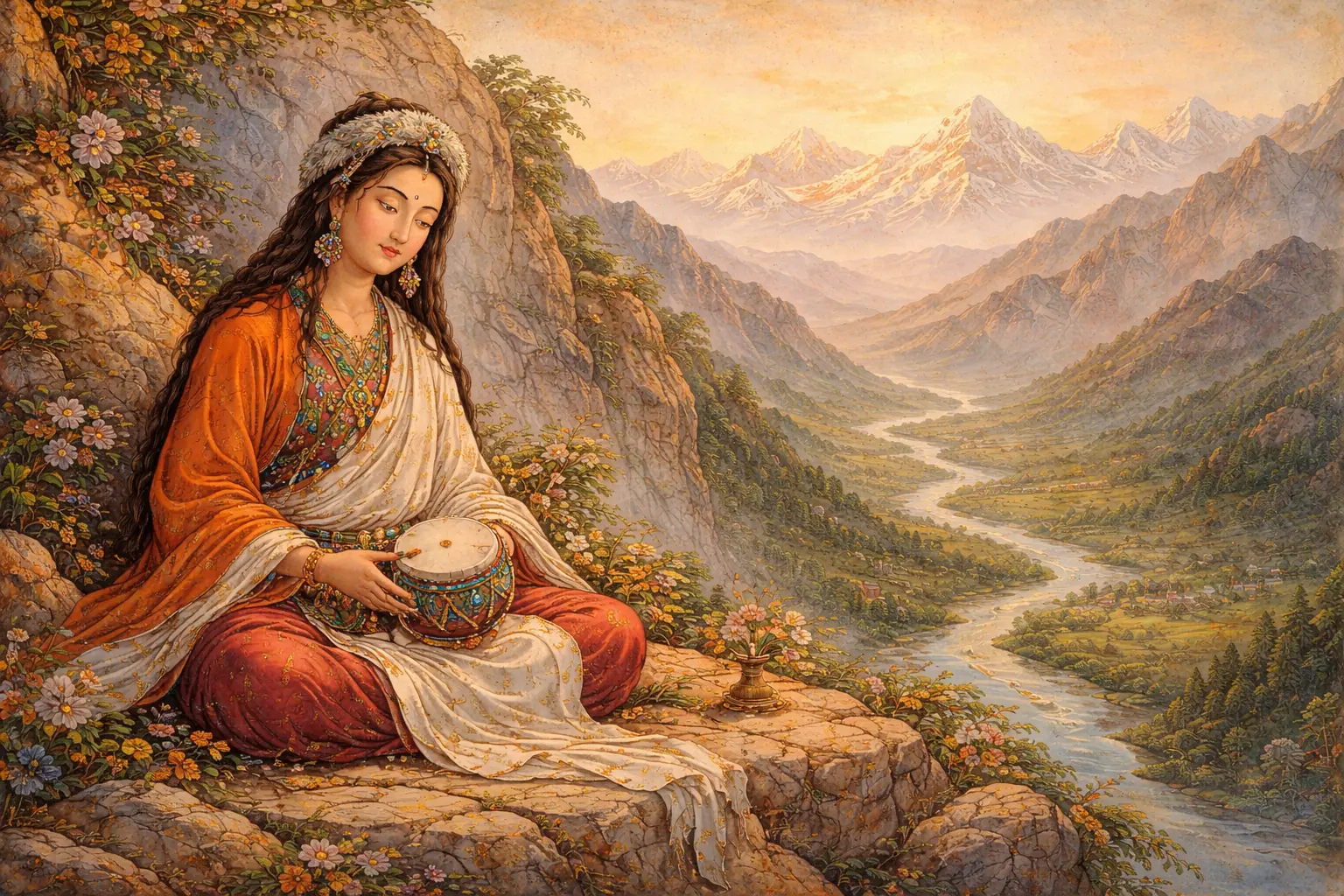
Commentary on the text “The Great Assembly of the Siddha Yogini Machig Labdrön” Teaching on the four demons and the fundamental principle of cutting through them. A text from an excerpt of the great assembly of the siddha yogini Machig Labdrön. The root of the demons is our own mind. When we perceive something as an external object and experience desire and attachment, we are possessed by demons and fall into delusion, mistaking a creation of our own mind for an object. There are four types of demons: the demon that obscures the truth, rooted in external objects; the formless demon, rooted in internal mental constructs; th

Nondual VisionEmptinessContemplationSelf-liberationEgoNihilismEternalism
item image

The Churning of the Ocean: The Alchemy of Attaining Immortality in the Mahabharata

author Гуру •date 30.09.2026 •duration 11 min. reading •views 29 просм.

Commentary on the “Mahabharata” We continue with the passage from the “Mahabharata” about how the gods obtained amrita. Yesterday we discussed how Durvasa Muni, while visiting an assembly of rulers, received a garland from them as a gift. Then, as he was returning to the world of the celestials, he decided that Indra was the most worthy and presented the garland to him. Indra passed it on to his attendants, and eventually the garland ended up on one of the ceremonial elephants. When, by chance, Durvasa Muni returned, he saw the elephant playing with the garland. Durvasa Muni flew into a rage, believing that Indra had no re

AmritaVishnuMahabharataLilaMount MeruDhanvantariKurmaDurvasa MuniAsurasChurning of the Ocean
item image

Union with Dattatreya through the wisdom of the Avadhuta Gita

author Гуру •date 30.09.2026 •duration 19 min. reading •views 45 просм.

For a sadhu, the chosen deity is the form of God in which God comes; it is his future, his ideal, into which he gradually transforms and becomes in the process of practice. Ishta-devata yoga, the upasana of the ishta-devata, means gradually merging with the chosen deity on various levels. At the level of fundamental consciousness, we merge with Dattatreya through jnana yoga, with Dattatreya’s body of wisdom, which is like the space of nondual emptiness. At the level of form, when we visualize ourselves in the form of Dattatreya, we acquire his subtle form and the abilities of this subtle form, depending on how successfully

BrahmanAvadhuta GitaIshta-devataShaivismAdvaitaDattatreyaAtmanShravanaMananaNididhyasana
item image

Ego: An Enemy to Oneself and the Path to Liberation

author Гуру •date 30.09.2026 •duration 13 min. reading •views 36 просм.

Commentary on the text “Ellam Ondre” (All Is One) by Subramaniam Vijay R., Chapter Six, “Ego.” O ego! All the evil arising in this world comes from you. Many kings and sages have created numerous laws and philosophical teachings in order to destroy you. How long have they already been trying to do this? But—alas! Remaining unharmed, you merely hide in order to manifest again and again. Has the time of your destruction not yet come? Yes, of course it has! Another subject has undertaken to kill you—it is the universal “I,” “Brahma aham bhava,” known as the experience “I am Brahman.” O ego! Do not consider your enemy equal to

Brahma-aham-bhavaContemplationDualityMindfulnessEgoBrahmanAwakeningIllusion
item image

Vishvarupa: The Cosmic Form of Shiva and the Yogic Path to Its Realization

author Гуру •date 29.09.2026 •duration 28 min. reading •views 64 просм.

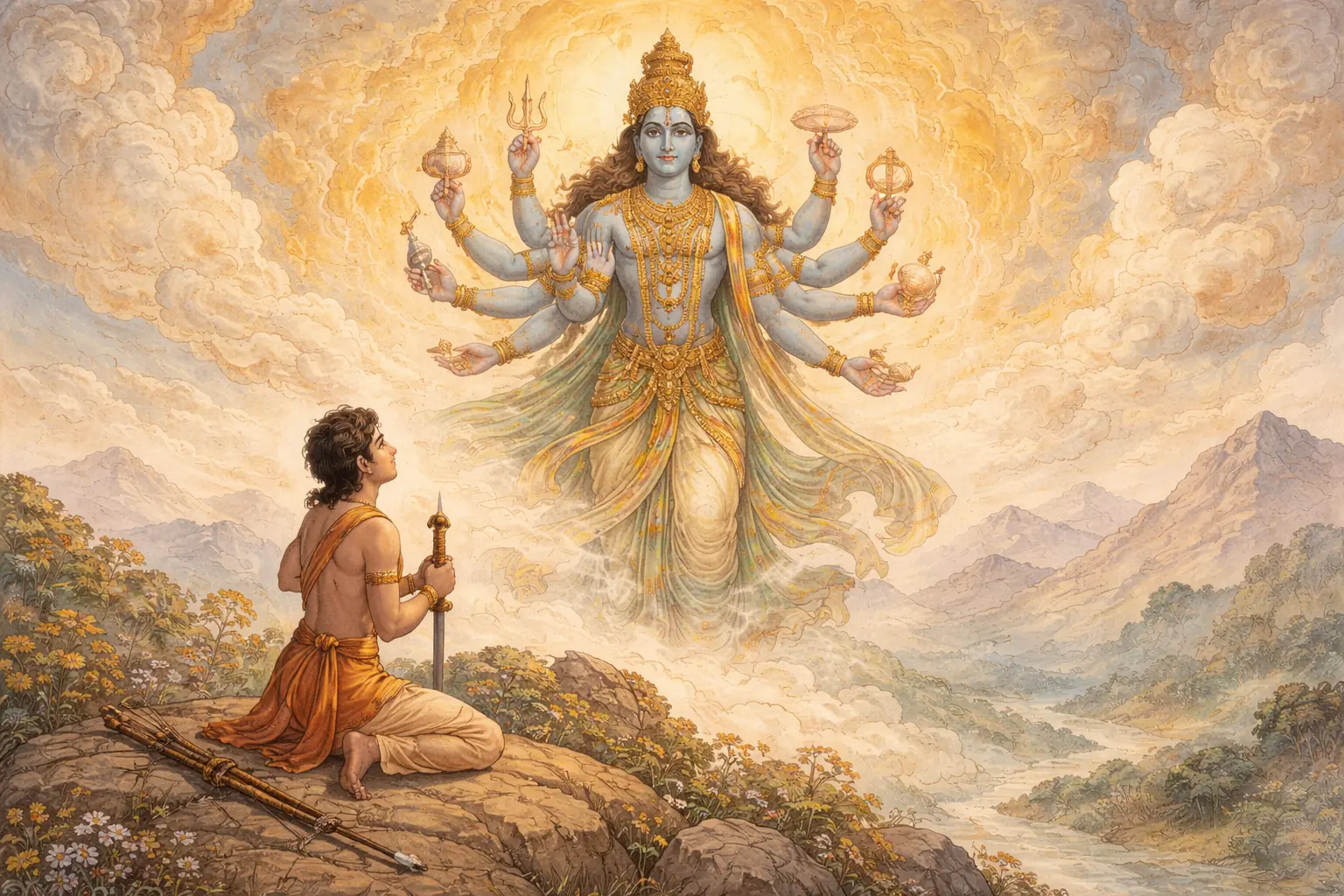
Commentary on the text “Shiva Gita,” Chapter 7, “Vishvarupa-Sandarshana Yoga” (2020-05-13) Sri Rama said: “O Swami! I have not received clarification regarding my main doubt. How do all beings arise from your body in a comprehensible and limited form? How do they survive, and how do they dissolve into you again? How are you present in the form of Brahma and other deities who perform their duties, and how do you abide in the form of these vast fourteen worlds? Please explain this. You have already spoken about it, but this matter is still unclear to me, so I have this doubt, and only you can dispel it.” Sri Bhagavan said: “

JnanaKundaliniSamadhiDivya-drishtiParamashivaShiva-gitaAnandaTattvasVishvarupaBhakti
Articles
Vidya AI
Search
Lectures
World Community of Sanatana Dharma
The world community unites people from many countries who belong to Sanatana Dharma (Hinduism) and practice yoga and meditation under the guidance of the enlightened Master of practical Advaita Swami Vishnudevananda Giri Maharaja.
Join Us
support@sanatanadharma.world